To add standing without hurting your feet, start with supportive, well-fitting shoes that cushion and stabilize. Use ergonomic mats to absorb shock and improve circulation where you stand. Choose flooring that reduces impact and enhances air quality. Change your posture frequently, shift weight from foot to foot, and take short breaks to stretch your calves and hamstrings. Incorporate these strategies, and you’ll discover more tips to stay comfortable longer.

Get comfort and recovery gear delivered free with Prime
- Fast, free delivery on millions of items
- Prime Video, Amazon Music and more included
- Member-only deals all year
Key Takeaways
- Wear supportive, cushioned shoes with proper fit to reduce foot fatigue during standing.
- Use ergonomic mats to absorb shock and improve circulation under your feet.
- Alternate standing positions and take short breaks to prevent muscle strain.
- Incorporate gentle stretches for calves, Achilles tendons, and hamstrings regularly.
- Choose flooring that provides cushioning and reduces impact for prolonged standing comfort.
Standing for long periods can take a toll on your feet, but with the right approach, you can reduce discomfort and keep your feet happy. One of the most effective ways to do this is by paying close attention to your footwear selection. Choosing shoes that provide proper support, cushioning, and stability is essential. Avoid high heels or shoes with thin soles that can put extra strain on your arches and heels. Instead, opt for footwear designed for standing, like those with cushioned insoles and arch support. Well-fitted shoes prevent unnecessary pressure points and reduce fatigue, making it easier to stand for longer periods without pain.
Choose supportive, cushioned shoes to reduce fatigue and keep your feet comfortable during long periods of standing.
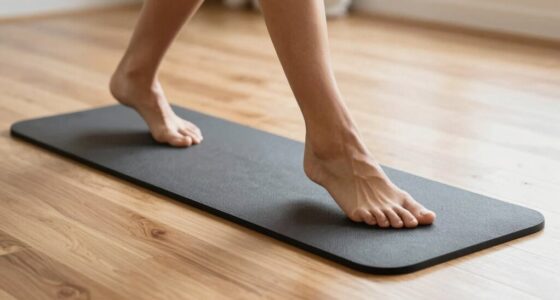
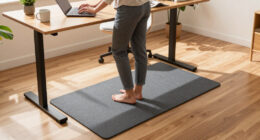
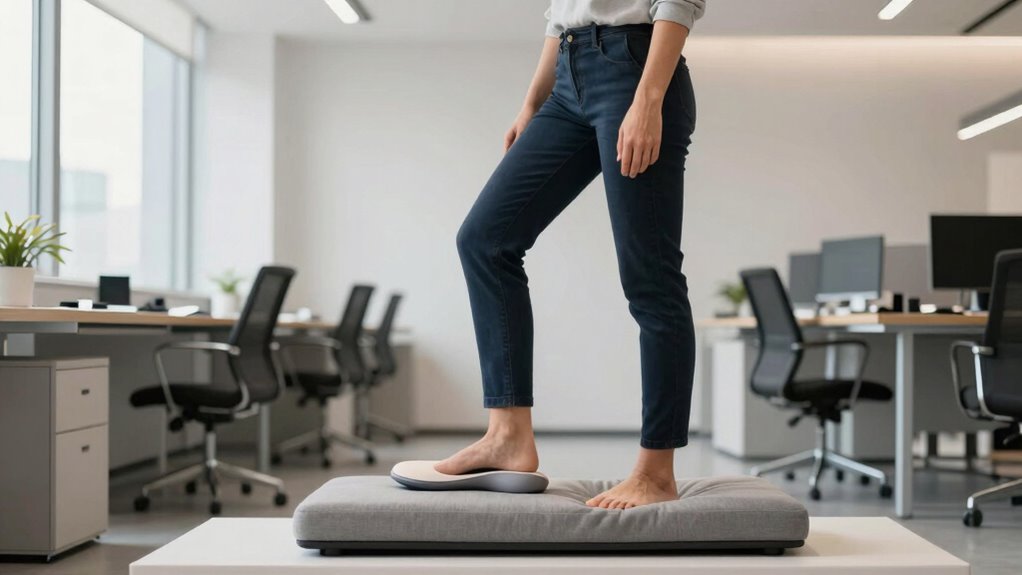
In addition to footwear, incorporating ergonomic mats into your standing space can make a significant difference. These mats are specially designed to absorb shock and reduce the impact on your feet, ankles, and legs. When you stand on a hard surface like concrete or tile for hours, the lack of cushioning can lead to soreness and fatigue. An ergonomic mat provides a softer surface that promotes better circulation and prevents discomfort from prolonged standing. Position the mat directly under your work area, and make sure it’s thick enough to offer comfort but sturdy enough to support your weight. Using proper footwear can significantly reduce strain and alleviate fatigue during extended periods of standing. Additionally, choosing appropriate flooring can also help improve indoor air quality and comfort by reducing dust and allergens that accumulate on hard surfaces. Incorporating biodiversity-friendly flooring options, such as natural materials, can further enhance indoor environmental quality. To further lessen the strain, consider standing posture**** techniques that help distribute your weight more evenly across your feet.
It’s also important to change your position frequently throughout the day. Standing in one spot for too long—even on the best footwear and ergonomic mats—can cause strain. Shift your weight from one foot to the other, or take quick breaks to sit down and rest your feet. Incorporate small movements or stretches to stretch your calves, Achilles tendons, and hamstrings. These simple actions help improve blood flow and reduce muscle stiffness, making standing less taxing. Additionally, practicing good posture can help distribute your weight more evenly and prevent unnecessary stress on your feet and lower back.
supportive cushioned shoes for standing
As an affiliate, we earn on qualifying purchases.
As an affiliate, we earn on qualifying purchases.
Frequently Asked Questions
How Long Should I Stand Each Day for Optimal Benefits?
You should aim to stand for about 2 to 4 hours daily, gradually increasing as your feet adapt. Use ergonomic mats to reduce pressure and incorporate foot stretching exercises to prevent discomfort. Break up long standing sessions with short walks or shifts to sitting. Listening to your body is key—if your feet start hurting, ease up and focus on proper footwear and stretching to keep standing beneficial without causing pain.
Can Standing Help Reduce Back Pain?
Ironically, standing might actually help reduce back pain, if you do it right. Using ergonomic mats eases pressure on your feet and spine, while foot exercises strengthen muscles and improve posture. Instead of sitting all day, standing properly encourages better alignment, which can alleviate discomfort. Just remember, standing isn’t a cure-all, but combined with these tips, it can make a noticeable difference in easing back pain.
What Type of Footwear Is Best for Standing Longer?
For standing longer, opt for footwear that combines comfort and eco-friendly options, aligning with current fashion trends. Look for shoes with good arch support, cushioned insoles, and a flexible sole to reduce foot fatigue. Eco-friendly options made from sustainable materials like cork, hemp, or recycled fabrics are both trendy and better for the environment. Avoid high heels or stiff shoes, which can cause discomfort and strain your feet over time.
How Can I Prevent Foot Soreness When Standing?
To prevent foot soreness when standing, you should regularly give your feet a foot massage to improve circulation and relieve tension. Also, consider using orthotic insoles in your shoes, which provide extra support and cushioning. Take breaks to stretch your feet and calves, and stay hydrated. These habits help reduce soreness, improve comfort, and keep your feet healthy during long periods of standing.
Is It Better to Alternate Between Sitting and Standing?
Yes, alternating between sitting and standing is better for your comfort and health. Using ergonomic desk setups and standing desk accessories helps you switch positions easily, reducing strain. When you shift between sitting and standing, your feet get relief, preventing soreness. Make sure your standing desk accessories support good posture, and take breaks to stretch. This approach keeps your feet happy and minimizes fatigue during long work hours.
ergonomic anti-fatigue standing mat
As an affiliate, we earn on qualifying purchases.
As an affiliate, we earn on qualifying purchases.
Conclusion
Now that you know how to stand tall without turning your feet into bitter rebels, think of your feet as loyal companions on a journey. Treat them kindly, and they’ll carry you further than you ever imagined. Balance is your secret weapon—like a tightrope walker gracefully traversing the wire. So, step confidently, listen to your feet’s whispers, and turn standing into a dance, not a battle. Your feet will thank you with every step you take.
As an affiliate, we earn on qualifying purchases.
orthopedic shoes for foot support
As an affiliate, we earn on qualifying purchases.
As an affiliate, we earn on qualifying purchases.
Halloween Picks
halloween
As an affiliate, we earn on qualifying purchases.