TL;DR

Get comfort and recovery gear delivered free with Prime
- Fast, free delivery on millions of items
- Prime Video, Amazon Music and more included
- Member-only deals all year
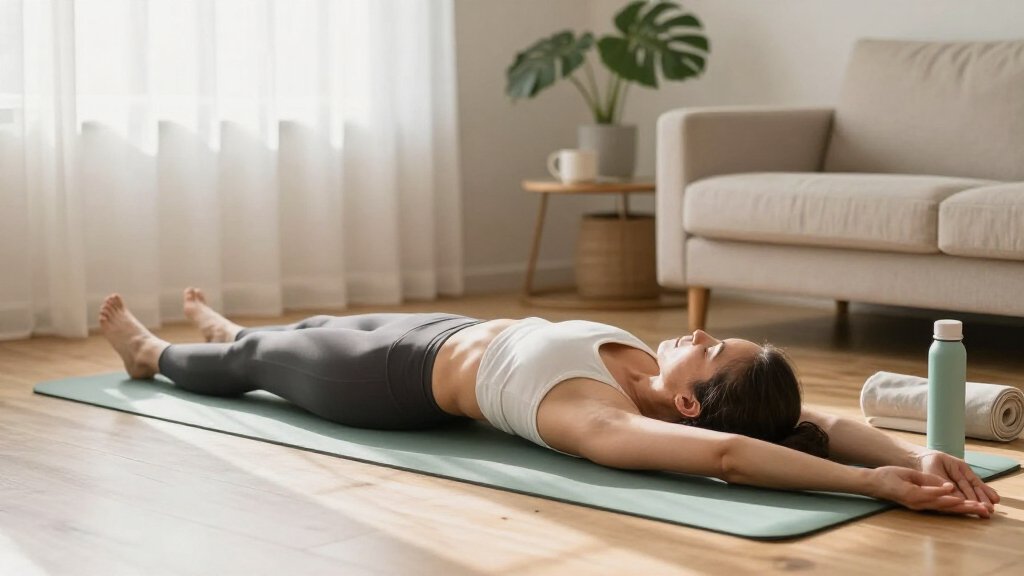
Fit&Well has published a 10-minute beginner Pilates routine from instructor Hannah Lawrence designed to ease back and hip stiffness through seven low-impact moves. The routine combines spinal mobility work with hip and hamstring stretches, and Lawrence advises stopping if any exercise causes pain.
Fit&Well has published a 10-minute beginner Pilates routine designed to ease stiffness in the back and hips, built around seven low-impact movements that require no equipment beyond an exercise mat. The routine, created by Sundrop Pilates instructor Hannah Lawrence, targets joint mobility in the spine and hips — areas where stiffness commonly builds from prolonged sitting and inactivity.
The session consists of seven exercises performed in sequence: pelvic curl/bridge (6–8 reps), cat-cow (10 reps), mermaid side bend (one minute per side), single-leg forward fold (30–60 seconds per side), single-leg hamstring stretch (one minute per side), Pilates roll down (3–4 reps), and supine knee rocks (5 reps per side). Most moves are done on the floor, and the sequence alternates between lying, kneeling, seated and standing positions.
According to the Fit&Well report, the routine is intended not only to maintain mobility but to improve the ability to move into and hold positions such as sitting cross-legged or reaching toward the toes. “The idea is that sitting cross-legged and reaching toward your toes will start to feel more comfortable and natural,” Lawrence told the publication.
Lawrence advises moving slowly through each exercise and ensuring each one feels like a stretch without causing pain. Several moves include built-in modifications: in the roll down, people with tight hamstrings are told to bend their knees more, and in the hamstring stretch, practitioners can point and flex the foot if it feels comfortable.
Why a Short Mobility Routine Appeals to Beginners
The routine’s appeal lies in its low barrier to entry: it requires no equipment, takes 10 minutes, and uses movements gentle enough for people new to Pilates. For readers who experience stiffness from desk-based work or sedentary routines, short structured sessions like this offer a manageable entry point compared with longer gym programs.
The report also frames the routine within a longer-term view of joint health, arguing that maintaining strength and mobility now supports easier movement in later years. That framing reflects a broader emphasis in fitness guidance on mobility training — not just strength or cardio — as a component of healthy aging.
It is worth noting what the routine does and does not promise. The exercises are presented as a way to support mobility and reduce stiffness, not as a treatment for back pain or any medical condition. Anyone with existing back, hip or joint problems should consult a qualified health professional before starting a new exercise routine.
How the Seven Movements Work Together
The routine pairs spinal mobility work — the pelvic curl, cat-cow, roll down and supine knee rocks — with hip and hamstring stretches such as the mermaid side bend, single-leg forward fold and lying hamstring stretch. This combination reflects standard Pilates practice, which emphasizes controlled, segmented movement of the spine alongside flexibility in the muscles surrounding the hips.
Each exercise comes with form cues from the source material. In the pelvic curl, the spine should peel off the mat “one vertebra at a time” until knees, hips and shoulders align. In the supine knee rocks, the shoulders stay pressed into the mat as the knees fall side to side. The cat-cow is done slowly, “feeling each segment of the back move.” These cues matter for beginners, since controlled execution rather than speed is what distinguishes the stretches from casual stretching.
What the Routine Doesn’t Guarantee
The report does not cite clinical research demonstrating that this specific 10-minute sequence reduces back or hip stiffness, and no timeframe for measurable improvement is given. Claims about improved mobility and long-term joint health reflect the instructor’s framing rather than published study results.
Individual results will vary based on factors such as baseline flexibility, consistency, and the underlying cause of stiffness — which can range from muscle tightness to medical conditions that no home routine addresses. The routine does not specify how many days per week it should be performed for best results, and it is not a substitute for professional evaluation of persistent or worsening back or hip pain.
Getting Started and Progressing Safely
Readers interested in trying the routine can find video demonstrations for each of the seven exercises linked in the original Fit&Well report. A sensible starting approach is to run through the full sequence once, moving slowly and using the provided modifications — such as deeper knee bends during the roll down — where needed.
From there, progression would logically involve repeating the routine several times per week and monitoring whether positions like sitting cross-legged or reaching toward the toes feel easier, consistent with Lawrence’s stated goal. Anyone experiencing pain during the exercises, or who has a pre-existing back or hip condition, should stop and consult a physical therapist or doctor before continuing.
Key Questions
Do I need any equipment for this Pilates routine?
No. The routine requires only an exercise mat and enough floor space to lie down, sit and stand. All seven movements use bodyweight resistance and stretching.
Is this routine suitable for complete beginners?
Yes, according to Fit&Well the routine is designed for beginners. Lawrence advises moving slowly, and several exercises include modifications — such as bending the knees more in the roll down — for people with tight muscles.
How often should I do the 10-minute flow?
The report does not specify a recommended frequency. As a general approach, short mobility routines of this type are commonly performed several times per week, but readers should gauge frequency by how their body responds.
Can this routine fix back pain?
The routine is presented as a way to support mobility and ease stiffness — not as a treatment for back pain or any medical condition. Anyone with persistent, worsening or diagnosed back or hip problems should consult a qualified health professional before starting.
What should I do if an exercise hurts?
Lawrence’s guidance is that each exercise should feel like a stretch but not cause pain. If a movement hurts, stop doing it. Pain that persists should be discussed with a doctor or physical therapist.
Source: rss
Halloween Picks
halloween
As an affiliate, we earn on qualifying purchases.