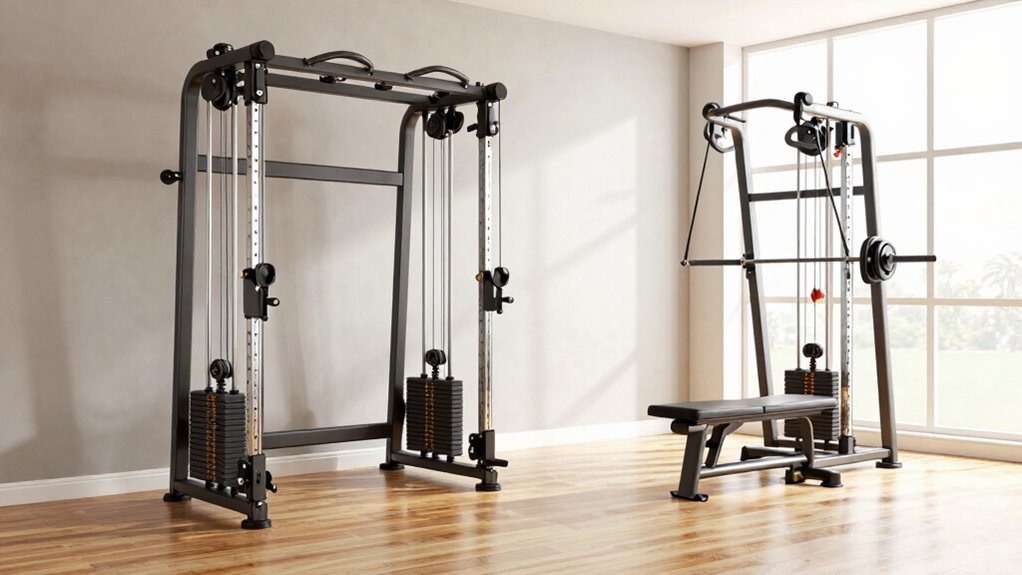

If you’re choosing a long-term fitness setup, a functional trainer offers adjustable resistance, exercise variety, space efficiency, and easier maintenance, making it a durable choice. All-in-one gyms provide an extensive workout experience but tend to be larger, more expensive, and require more upkeep. Your decision depends on your space, budget, and fitness goals. Want to discover which option fits your needs best? Keep exploring to find out more.

Get comfort and recovery gear delivered free — and shop member deals
- Fast, free delivery on millions of items
- Access to Prime Big Deal Days deals on October 6–7
- Prime Video, Amazon Music and more included
Key Takeaways
- Functional trainers offer greater flexibility, customization, and space efficiency, making them ideal for long-term varied workouts.
- All-in-one gyms provide comprehensive exercise options in a single unit but tend to be larger and more costly over time.
- Functional trainers are generally more durable, easier to maintain, and adaptable for future upgrades.
- All-in-one machines may require higher initial investment and maintenance, potentially increasing long-term costs.
- Choose functional trainers for flexibility, longevity, and space-saving benefits; opt for all-in-one gyms for convenience and all-in-one training.
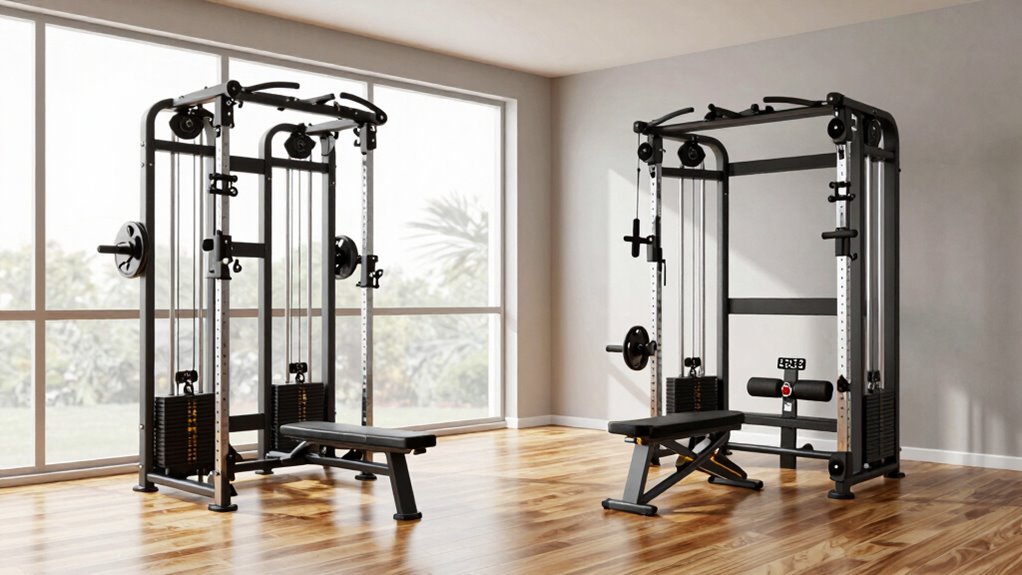
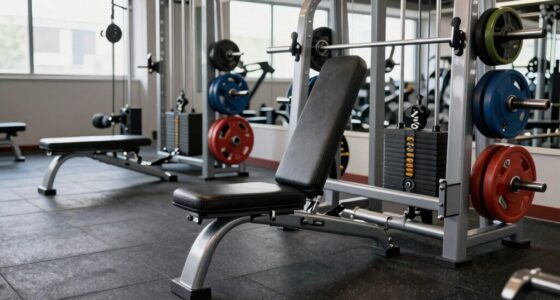
When choosing a home gym setup, you might wonder whether a functional trainer or an all-in-one machine best fits your fitness goals. Both options offer unique advantages, but understanding their differences can help you make a more informed decision. A functional trainer typically features adjustable weights, allowing you to customize resistance levels for a variety of exercises. This flexibility means you can target specific muscle groups and progressively increase intensity, which is great for building strength and practical movement. On the other hand, an all-in-one machine combines multiple workout stations into a single unit, often including weight stacks, pulleys, and attachments. While this setup might seem less adaptable, it’s usually designed to cover a broad range of exercises, making it a versatile choice for all-encompassing training. Additionally, the design simplicity of functional trainers often translates to easier maintenance and upgrades over time. This simplicity not only enhances longevity but also simplifies repairs, making them a practical long-term investment. Understanding the modularity of different gym equipment can help you better evaluate potential upgrades or replacements in the future. Space efficiency is a critical factor in your decision. Functional trainers are generally more compact, often resembling a tall, narrow frame that can fit into smaller spaces. They’re ideal if you’re limited on square footage but still want the ability to perform multiple exercises, from cable crossovers to tricep pushdowns. The adjustability of weights in a functional trainer means you can vary the resistance without needing additional equipment, saving space and clutter. Conversely, all-in-one machines tend to occupy more room due to their multiple stations and larger footprint. If you have a dedicated workout area and want to maximize variety without sacrificing convenience, an all-in-one might be worth the extra space.
Choosing between a functional trainer and all-in-one machine depends on your space, flexibility, and fitness goals.
Long-term durability and cost also matter. Functional trainers, with their simple design and adjustable weights, tend to be more durable over time and easier to maintain. They generally require less upkeep and can be upgraded with new attachments or accessories. All-in-one machines, while offering convenience through their integrated design, may involve higher initial costs and potential repairs if parts wear out. However, they often provide a more seamless workout experience, especially for users who prefer a guided, all-in-one setup.
Ultimately, the better long-term buy depends on your priorities. If you value customization, space efficiency, and durability, a functional trainer with adjustable weights might serve you best. But if you prefer a comprehensive, all-in-one solution that minimizes setup time and offers a variety of exercises in one place, then an all-in-one machine could be more suitable. Consider your available space, workout preferences, and future goals to choose the setup that will keep you motivated and consistent over the years.
functional trainer cable machine
As an affiliate, we earn on qualifying purchases.
As an affiliate, we earn on qualifying purchases.
Frequently Asked Questions
Which Option Offers Better Space Efficiency for Small Home Gyms?
A functional trainer typically offers better space efficiency for small home gyms because of its sleek, compact design, allowing you to maximize your limited space. It also provides design flexibility, enabling you to customize workouts without clutter. While all-in-one gyms might be bulkier, a functional trainer’s aesthetic appeal helps it blend seamlessly into your home, making it a smarter choice for tight spaces.
Are There Significant Differences in Workout Variety Between the Two?
You’ll find that workout variety is pretty comparable between functional trainers and all-in-one gyms, but it’s not a one-size-fits-all situation. Functional trainers excel in accessory versatility, allowing you to target different muscle groups with a range of attachments, and often include cardio options. All-in-one gyms tend to focus on core strength and include built-in cardio features, giving you more options without clutter. It’s a balancing act—choose what suits your workout style best.
How Does Long-Term Durability Compare Between Functional Trainers and All-In-One Gyms?
Durability concerns depend largely on material quality and construction. Functional trainers often feature steel frames and high-quality cables, making them more resistant to wear over time. All-in-one gyms, with their multiple components, may present more points of failure if materials or assembly are subpar. You’ll want to prioritize models with solid build quality and durable materials to guarantee your equipment withstands frequent use and lasts for years.
Can These Equipment Types Accommodate Users of All Fitness Levels?
Both functional trainers and all-in-one home gyms are adaptable for beginners, thanks to their customizable options. You can easily adjust weights, resistance levels, and attachments to suit your fitness level. These machines accommodate users of all abilities because they offer versatile exercises and modifications. So, whether you’re just starting or more advanced, you’ll find that both types support your progression with plenty of customization options to grow with your fitness journey.
What Are the Typical Maintenance Requirements for Each?
About 70% of users report regular cleaning routines extend equipment lifespan. For functional trainers, you’ll mainly need to wipe down surfaces and lubricate cables periodically, while all-in-one gyms may require more frequent part replacements, like pulleys or weight stacks. Consistent maintenance keeps both types running smoothly, but functional trainers often demand less upkeep over time. Setting a routine guarantees longevity and ideal performance for your investment.
As an affiliate, we earn on qualifying purchases.
Conclusion
Imagine yourself stepping into a room where your workout equipment feels like an extension of your own body—fluid, versatile, ready for anything. Whether you choose a functional trainer or an all-in-one home gym, think about how each piece will shape your daily routine and long-term goals. Like a trusted companion on your fitness journey, your choice should inspire confidence and adaptability, turning your space into a sanctuary of strength and resilience for years to come.
adjustable resistance functional trainer
As an affiliate, we earn on qualifying purchases.
As an affiliate, we earn on qualifying purchases.
As an affiliate, we earn on qualifying purchases.
Fall Picks
fall essentials
As an affiliate, we earn on qualifying purchases.