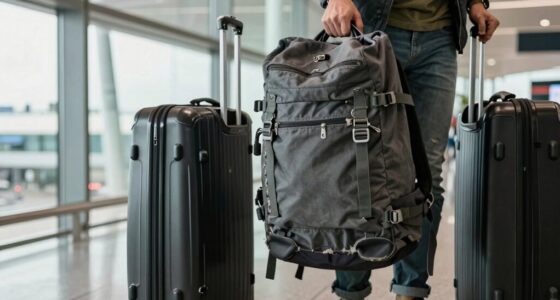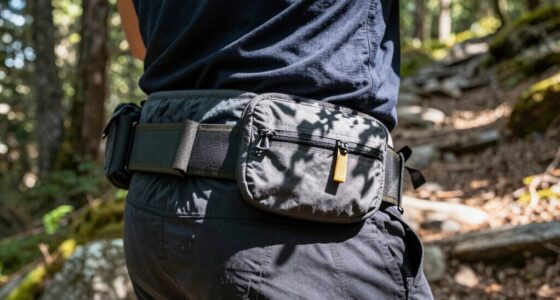

Carrying weight mainly on one side causes your muscles to adapt unevenly, leading to imbalances that affect your posture and strength. Over time, your body tilts or leans to compensate, which can cause misalignment, joint strain, and back pain. This habit also weakens muscles on the opposite side, increasing the risk of falls and injuries. If you keep doing this, your overall balance and health suffer. Stay with us to discover how to prevent and correct these issues.

Get comfort and recovery gear delivered free with Prime
- Fast, free delivery on millions of items
- Prime Video, Amazon Music and more included
- Member-only deals all year
Key Takeaways
- Consistently carrying on one side causes muscular imbalances and uneven muscle development.
- It leads to postural adjustments like tilting or leaning, resulting in misalignment.
- Over time, imbalance increases risk of musculoskeletal problems and joint strain.
- Uneven load distribution can impair spinal health and cause discomfort or pain.
- Alternating sides and strengthening core muscles help prevent long-term posture and balance issues.
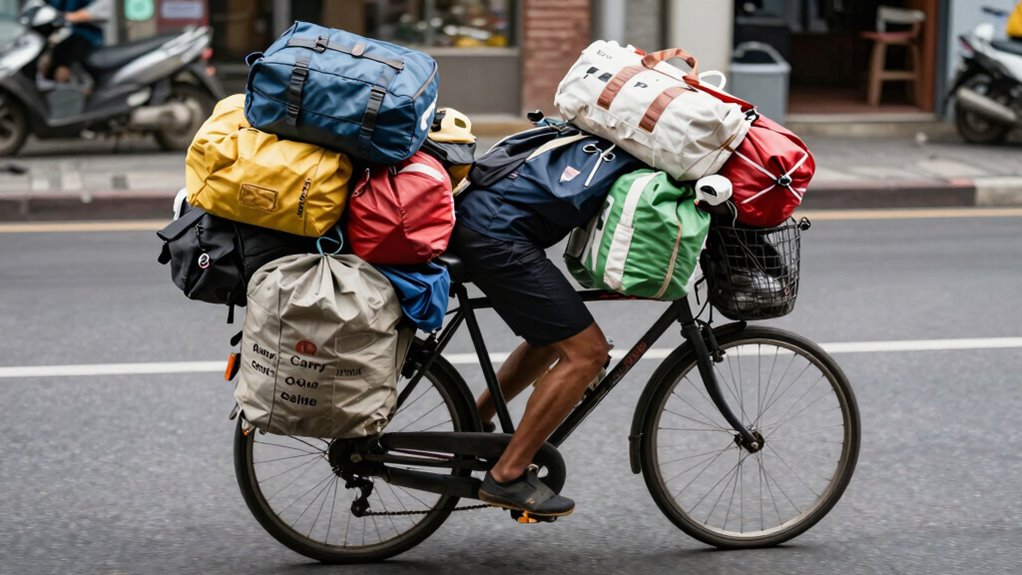
Have you ever wondered why some people tend to carry their bags or belongings on one side only? It’s a common habit, but it’s not just about convenience or style. When you consistently keep your bag on one side, your body adapts to this uneven load, which can lead to several physical issues over time. This habit impacts weight distribution across your body and makes balance maintenance more challenging. Carrying weight mainly on one side causes your muscles to develop unevenly, with the side holding the bag becoming stronger or more accustomed to supporting the load. Meanwhile, the opposite side may weaken, leading to muscular imbalance. This imbalance can cause discomfort, postural problems, and even long-term musculoskeletal issues if left uncorrected.
Your body naturally seeks balance and symmetry, so when you carry a bag on one side, it has to compensate to keep you upright. This compensation involves subtle adjustments in your posture, such as tilting your pelvis, leaning slightly to one side, or shifting your spine. Over time, these adjustments become habitual, and your muscles adapt accordingly. The result is a misalignment that affects your overall posture, which can lead to back pain, shoulder strain, or neck tension. Carrying on one side also diminishes your ability to maintain proper balance because your body’s weight distribution becomes uneven. This imbalance may make you more prone to falls or injuries, especially if you’re unaware of the ongoing strain. Additionally, muscle imbalance can influence other areas of body function, further compounding postural issues. Regularly engaging in posture correction exercises can help mitigate these effects and promote better alignment.
Moreover, being mindful of your carrying habits and practicing ergonomic habits can significantly improve your overall musculoskeletal health and prevent long-term complications. Maintaining a balanced posture involves equally distributing weight across both sides of your body. When you carry a bag on only one side, you disrupt this natural equilibrium, forcing your muscles and joints to compensate. Over time, this can cause asymmetrical wear and tear, affecting your spine and joints. If you want to prevent these issues, it’s essential to be mindful of how you carry your belongings. Alternating sides, using backpacks that distribute weight evenly, or keeping the load light can help you maintain better balance. Strengthening your core muscles also plays a crucial role in supporting proper posture and compensating for uneven load distribution. By paying attention to how you carry your belongings, you can avoid developing habits that compromise your body’s natural balance and reduce the risk of discomfort or injury caused by poor weight distribution and balance maintenance.
ergonomic backpack with weight distribution
As an affiliate, we earn on qualifying purchases.
As an affiliate, we earn on qualifying purchases.
Frequently Asked Questions
How Did the “Always Carry on One Side” Problem Originate Historically?
You might find that the “always carry on one side” problem originated from historical origins related to transportation and safety practices. Over time, as vehicles and pedestrians shared paths, the problem evolved, leading to conventions like keeping to one side to prevent accidents. This evolution aimed to organize movement, reduce confusion, and improve safety, creating a longstanding tradition that still influences how we navigate shared spaces today.
Are There Real-World Applications of This Problem in Everyday Life?
You might not realize it, but this problem sneaks into daily life like a shadow. Practical examples include balancing a backpack on one shoulder, where you favor one side, or consistently leaning on one leg while waiting in line. In everyday scenarios, it’s about habits that tilt your posture or routines that favor one approach. These small choices can subtly influence your body’s alignment, illustrating how this problem manifests beyond theory into real-world situations.
Can This Problem Be Solved With Simple Algorithms or Heuristics?
You can often solve this problem with heuristic strategies or simple algorithmic solutions. Heuristics, like always carrying the object on the same side, provide quick, practical answers, while basic algorithms can systematically address the issue by defining rules for handling objects. Both approaches help streamline the process, reducing errors and making it easier to manage your load efficiently. So, yes, straightforward solutions are quite effective here.
What Are Common Misconceptions About the Problem’s Solution?
You might think the solution myths for this problem are simple or that misconceptions myths can be easily fixed, but that’s not always true. Many believe a quick fix or straightforward algorithm solves it, yet the reality is complex. This problem’s tricky, and common misconceptions often lead to oversimplified solutions. Don’t fall for myths—understanding the nuances helps you avoid the myth that a quick fix will always work.
How Does the Problem Relate to Similar Issues in Logistics or Transportation?
You’ll notice how this problem relates to logistics and transportation through cargo imbalance, which can cause uneven weight distribution, affecting vehicle stability and efficiency. Route optimization becomes essential to balance loads and guarantee safe, cost-effective deliveries. By strategically planning routes, you minimize cargo imbalance issues, preventing unnecessary delays and fuel consumption. This approach mirrors real-world challenges in logistics, where balancing loads and optimizing routes are key to smooth operations.
posture correction exercise equipment
As an affiliate, we earn on qualifying purchases.
As an affiliate, we earn on qualifying purchases.
Conclusion
By understanding the “always carry on one side” problem, you can better balance your load and avoid unnecessary strain. Think of your belongings as a delicate dance partner—you want to move in harmony, not stumble over each step. When you distribute weight evenly, you keep your posture steady and your day flowing smoothly. Remember, a little awareness and adjustment go a long way in preventing discomfort and maintaining your rhythm.
As an affiliate, we earn on qualifying purchases.
As an affiliate, we earn on qualifying purchases.
Halloween Picks
halloween
As an affiliate, we earn on qualifying purchases.