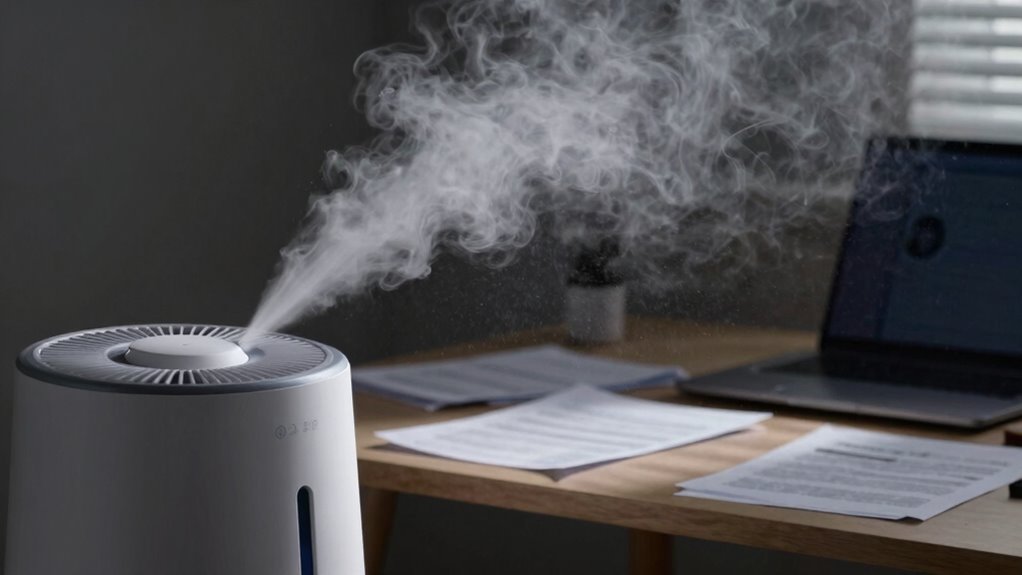

Dry air can make work and sleep feel harder by causing nasal congestion, sore throats, and skin dryness, which can interfere with your comfort and breathing. It promotes irritation of your mucous membranes, leading to coughs and difficulty staying asleep. The discomfort from dryness often fragments your sleep and reduces focus during work. If you want to understand how to improve your environment and feel better, keep exploring these helpful tips.

Get comfort and recovery gear delivered free with Prime
- Fast, free delivery on millions of items
- Prime Video, Amazon Music and more included
- Member-only deals all year
Key Takeaways
- Dry air irritates nasal and throat tissues, causing discomfort that disrupts sleep and reduces focus during work.
- Increased airborne irritants in dry environments lead to allergies and respiratory issues, affecting concentration and productivity.
- Dehydrated mucous membranes impair the body’s ability to filter pathogens, raising illness risk and causing fatigue.
- Dryness causes skin and nasal cracks, leading to discomfort and frequent waking, making restful sleep harder to achieve.
- Low humidity supports bacterial and viral growth, increasing the likelihood of illnesses that can hinder work performance and rest.
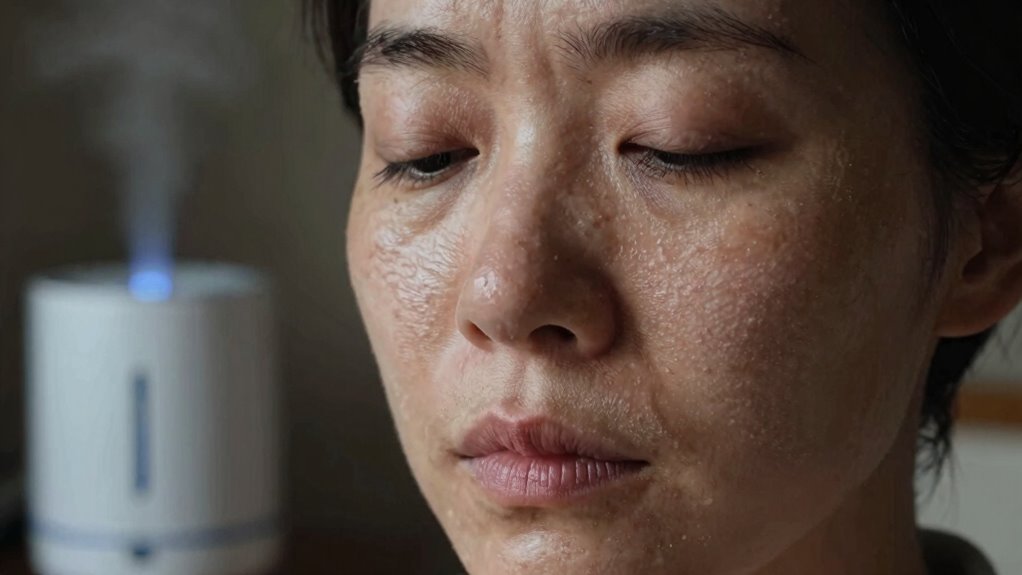
Dry air can considerably impact your daily productivity and quality of sleep, especially during the colder months when indoor heating reduces humidity levels. When the air lacks moisture, it becomes easier for airborne irritants like dust, pollen, and pet dander to become more concentrated and irritating. These airborne irritants can lead to sneezing, nasal congestion, and throat irritation, making it harder to breathe comfortably. As a result, you might find yourself constantly clearing your throat or feeling stuffed up, which disrupts your focus during work and hampers your ability to unwind at night.
Maintaining a proper humidity balance is essential for reducing these airborne irritants and preventing their negative effects. When the air is too dry, your mucous membranes dry out, losing their ability to trap and filter out unwanted particles effectively. This increases your vulnerability to allergies and respiratory issues, which can cause discomfort and fatigue. During work hours, this translates into decreased concentration, frequent coughing, and a general sense of being unwell. At night, dry air can cause your throat to feel sore, your sinuses to become inflamed, and your sleep to be fragmented by coughing or breathing difficulties. Additionally, dry environments can encourage the growth of bacteria and viruses, further compromising your health. Proper humidity levels can also support immune function, making it easier for your body to fight off illnesses. Ensuring adequate moisture in the air can also prevent mucous membrane dryness, which is crucial for maintaining respiratory health.
Furthermore, dry air can cause your skin and nasal passages to become dry and cracked. This not only leads to discomfort but can also create tiny openings for bacteria and viruses to enter, raising your risk of infections. When you’re feeling physically unwell because of dryness, your ability to stay focused and productive diminishes. Sleep quality also suffers because dry nasal passages and throat discomfort make it harder to fall asleep or stay asleep through the night. You might find yourself waking up frequently, feeling unrefreshed in the morning, and experiencing overall fatigue during the day. Properly managing humidity levels in your environment can also prevent mucous membrane dryness, which is a key factor in maintaining overall respiratory health.
Adding moisture to the air can also help regulate temperature, making your indoor environment more comfortable and reducing the need for excessive heating or cooling. This can create a more stable and cozy space, especially during winter months. Balancing humidity levels in your environment can drastically improve your well-being. Using humidifiers or placing bowls of water around your space can help add moisture back into the air. This not only reduces airborne irritants but also keeps your mucous membranes moist, making it easier to breathe and sleep comfortably. When your environment maintains a healthy humidity balance, you’ll notice fewer allergy symptoms, less throat irritation, and a more restful, uninterrupted sleep. Ultimately, managing dry air is a simple yet effective way to enhance your productivity at work and your quality of sleep, especially during the dry winter months.
As an affiliate, we earn on qualifying purchases.
Frequently Asked Questions
Can Dry Air Cause Long-Term Health Issues?
Yes, dry air can cause long-term health issues. Poor indoor air quality due to low humidity can lead to chronic dehydration, which strains your body and weakens your immune system. Over time, this can increase your risk of respiratory problems, skin irritation, and infections. You might not notice immediate effects, but maintaining proper humidity levels helps protect your health and keeps your body functioning most effectively.
How Do I Measure Indoor Humidity Levels Accurately?
Imagine your indoor air as a gentle breeze on a summer day. To measure humidity levels accurately, use a hygrometer and verify its calibration is correct for precise readings. Regular humidity levels monitoring helps you detect dry air, so you can adjust humidifiers or vents accordingly. This way, you maintain a comfortable environment, preventing dryness from sneaking into your work and sleep routines.
Are Certain Climates More Prone to Dry Air Problems?
Certain climates, especially arid or desert zones, are more prone to dry air problems. In these climate zones, low humidity levels make it harder to maintain comfortable indoor environments without humidity control. If you live in such areas, you’ll need to actively manage humidity levels through humidifiers or other methods to prevent dry air from affecting your sleep and work. Proper humidity control can substantially improve your indoor comfort.
What Are Natural Ways to Add Moisture to the Air?
To add moisture naturally, you can place bowls of water around your space or hang damp towels to increase humidity. Indoor plants also release natural moisture, boosting humidity levels. Using a humidifier offers benefits by maintaining consistent moisture, but these simple natural sources are effective and cost-efficient. Incorporating them helps you breathe easier, improves sleep, and makes work more comfortable in dry environments.
Does Dry Air Affect All Age Groups Equally?
An age-old saying is “different strokes for different folks,” and it applies here. Dry air impacts age groups differently due to age-specific respiratory needs and skin sensitivity. Young children and seniors tend to be more vulnerable, experiencing increased respiratory discomfort and skin dryness. Adults usually handle dry air better, but everyone can benefit from maintaining proper humidity levels to stay comfortable and healthy.
As an affiliate, we earn on qualifying purchases.
Conclusion
When the air around you is dry, it’s like trying to swim through a desert—everything feels tougher. Your work becomes more draining, and slipping into a restful sleep gets harder, leaving you feeling parched and unrested. To keep your mind sharp and your nights peaceful, keep humidity levels in check. Think of humid air as a gentle hand guiding you through the day and night, making both work and sleep feel a little less like battling a barren wasteland.
As an affiliate, we earn on qualifying purchases.
nasal spray for dry nasal passages
As an affiliate, we earn on qualifying purchases.
As an affiliate, we earn on qualifying purchases.
Halloween Picks
halloween
As an affiliate, we earn on qualifying purchases.