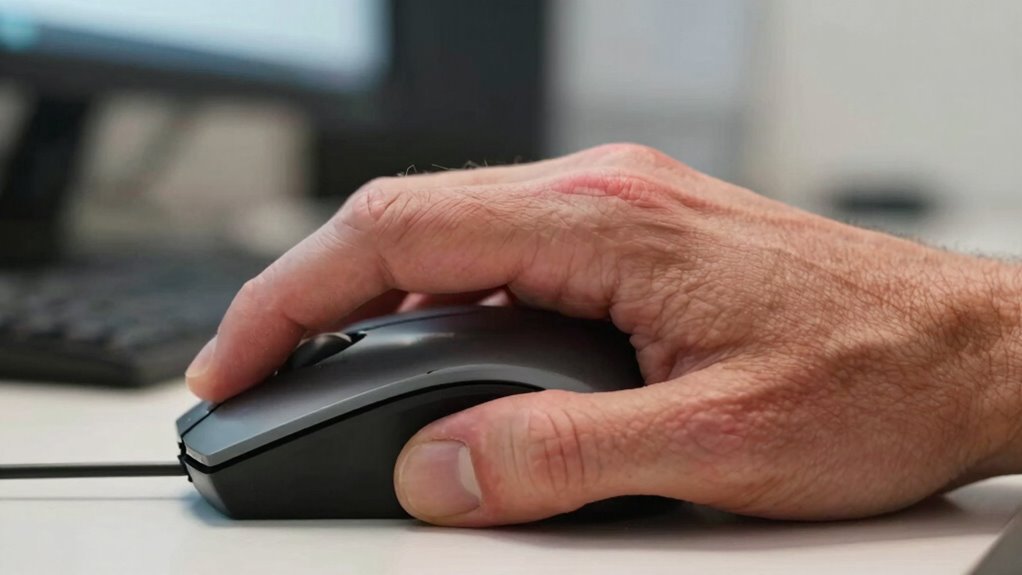

Your mouse hand tires before the rest of you because repetitive movements like clicking, scrolling, and dragging cause microtrauma in your muscles, tendons, and nerves, making them fatigue quickly. Poor ergonomics and prolonged static positions increase tension and reduce blood flow, leading to discomfort and strain. Small repetitive actions stress the same tissues repeatedly, speeding up fatigue. If you want to understand how to prevent this and keep your hand comfortable, there’s more to take into account.

Get comfort and recovery gear delivered free — and shop member deals
- Fast, free delivery on millions of items
- Access to Prime Big Deal Days deals on October 6–7
- Prime Video, Amazon Music and more included
Key Takeaways
- Repetitive clicking and scrolling cause microtrauma and muscle fatigue in the hand and wrist tissues.
- Poor ergonomics and awkward positioning increase tension and strain on hand muscles.
- Prolonged static hand posture reduces blood flow, leading to quicker fatigue.
- Small ergonomic accessories support natural hand posture, reducing strain and discomfort.
- Continuous strain from repetitive movements makes the hand tire faster than other body parts.
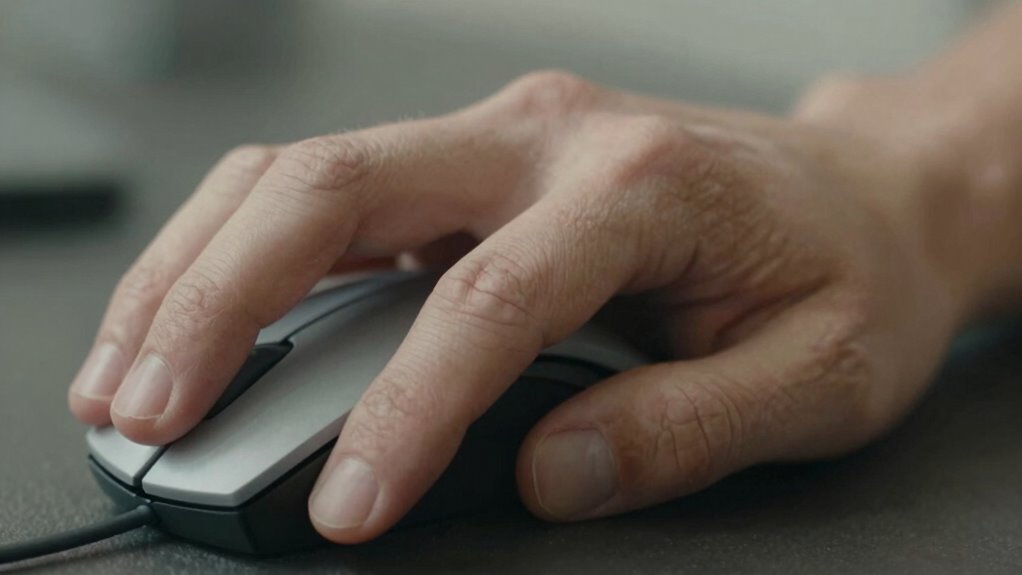
If you spend long hours at your computer, you might notice your mouse hand feeling sore or tired. It’s a common problem, and it often happens because your hand isn’t in an ideal position while working. Repetitive movements, such as clicking and scrolling, put stress on your hand and wrist, leading to discomfort over time. That’s where ergonomic accessories can make a real difference. Using tools designed to support your hand’s natural position helps reduce strain and prevent the onset of repetitive strain injuries. Ergonomic mice, wrist rests, and adjustable desks aren’t just luxury items—they’re practical solutions to keep your hand comfortable during extended work sessions.
Your mouse hand gets tired because of the repetitive nature of the movements involved in clicking, dragging, and scrolling. These repeated actions cause microtrauma in the muscles, tendons, and nerves of your hand and wrist. Over time, this can lead to pain, numbness, or tingling, which are signs of strain. When you keep your hand in the same position for hours without proper support, the muscles become fatigued, and blood flow diminishes. This fatigue is why your mouse hand often feels the first to protest, even when the rest of your body is still fine. The repetitive strain isn’t just about the physical act; it’s also about how your body is aligned. Poor ergonomics can force your hand into awkward angles, increasing tension and accelerating fatigue. Incorporating ergonomic principles into your workspace setup can further improve your comfort and reduce strain.
Repetitive movements cause strain, fatigue, and discomfort in your hand and wrist over time.
One way to address this issue is by investing in ergonomic accessories that promote natural positioning and reduce unnecessary stress. An ergonomic mouse, for example, is designed to fit comfortably in your hand, encouraging a more neutral wrist position. Pairing it with a wrist rest can help keep your wrist straight, preventing it from bending unnaturally during long stretches. Additionally, proper workstation setup** that considers factors like monitor height and keyboard placement can significantly improve overall comfort and reduce strain on your entire upper body. Small changes like these, combined with taking frequent breaks, can markedly alleviate the fatigue you feel in your mouse hand. Paying attention to your workstation setup and incorporating ergonomic accessories into your daily routine can make a noticeable difference. Your hand’s fatigue isn’t just a minor annoyance; it’s a sign that your body needs better support. By addressing these issues early, you can prevent more serious problems down the line, allowing you to work comfortably and efficiently** for hours on end.
As an affiliate, we earn on qualifying purchases.
Frequently Asked Questions
Can Ergonomic Mice Reduce Hand Fatigue Effectively?
Yes, ergonomic mice can effectively reduce hand fatigue. Their ergonomic design promotes a natural hand posture, minimizing strain during extended use. By supporting your wrist and fingers properly, these mice help prevent discomfort and repetitive stress injuries. When you choose an ergonomic mouse, you encourage better hand positioning, which can lead to less fatigue over time. Ultimately, investing in ergonomic design improves comfort and helps you work longer without pain.
How Often Should I Take Breaks to Prevent Hand Strain?
You should take breaks every 30 to 60 minutes to prevent hand strain. When you pause, focus on relaxing your hand grip and adjusting your wrist posture—because apparently, your mouse hand’s endurance is not limitless. Use these breaks to stretch your fingers and shake out tension, or risk turning your ergonomic nightmare into a permanent feature of your workday. Trust us, your wrist will thank you.
Does Hand Size Affect How Quickly My Hand Gets Tired?
Your hand size can influence fatigue factors, making some people tire faster while using a mouse. If you have smaller hands, you might need a more ergonomic mouse or adjust your grip to reduce strain. Larger hands could experience fatigue quicker if the mouse isn’t suited to your size. Paying attention to comfort and choosing the right equipment helps prevent tiredness, regardless of your hand size.
Are There Specific Exercises to Strengthen My Mouse Hand?
Yes, there are specific exercises to strengthen your mouse hand. You can improve your hand grip by squeezing a stress ball or using grip strengtheners regularly. Incorporate wrist stretches, like gently pulling your fingers back or rotating your wrists, to increase flexibility and reduce fatigue. These exercises help build strength and endurance, making your hand less tired during long computer sessions. Consistency is key for lasting benefits.
What Signs Indicate My Mouse Hand Needs Medical Attention?
If you notice persistent pain, numbness, tingling, or weakness in your mouse hand, it’s time to seek medical attention. These signs could indicate nerve compression or repetitive strain injuries. Consider using ergonomic wrist support to reduce strain and explore alternative input devices to minimize stress. Don’t ignore ongoing discomfort, as early intervention can prevent long-term damage and improve your hand’s health.
As an affiliate, we earn on qualifying purchases.
Conclusion
So, next time your mouse hand feels sore, remember it’s not just about taking breaks — it’s about improving your setup and habits. You might think it’s just part of working long hours, but small adjustments can make a big difference. Don’t dismiss the discomfort; address it now, so you prevent bigger issues later. Your hand’s health is worth the effort, and with a few simple changes, you’ll stay comfortable and productive longer.
As an affiliate, we earn on qualifying purchases.
As an affiliate, we earn on qualifying purchases.
Halloween Picks
halloween
As an affiliate, we earn on qualifying purchases.