When choosing between desk lamps and circadian lamps, focus on their functions—desk lamps offer targeted, adjustable lighting for tasks, while circadian lamps mimic natural light to support your biological rhythms and improve sleep. Look for features like adjustable brightness, color temperature shifts, and energy efficiency. Understanding these differences helps you create a space that boosts productivity and promotes well-being. Keep exploring to discover detailed tips that can help you pick the perfect lighting for your needs.

Get comfort and recovery gear delivered free — and shop member deals
- Fast, free delivery on millions of items
- Access to Prime Big Deal Days deals on October 6–7
- Prime Video, Amazon Music and more included
Key Takeaways
- Choose desk lamps with adjustable brightness and direction for effective task lighting.
- Opt for circadian lamps that mimic natural light patterns to support healthy sleep-wake cycles.
- Consider color temperature options: cooler light for alertness, warmer tones for relaxation.
- Prioritize energy-efficient LED models with features like dimming and automatic timers.
- Combine both lamp types to enhance productivity during the day and promote restful sleep at night.
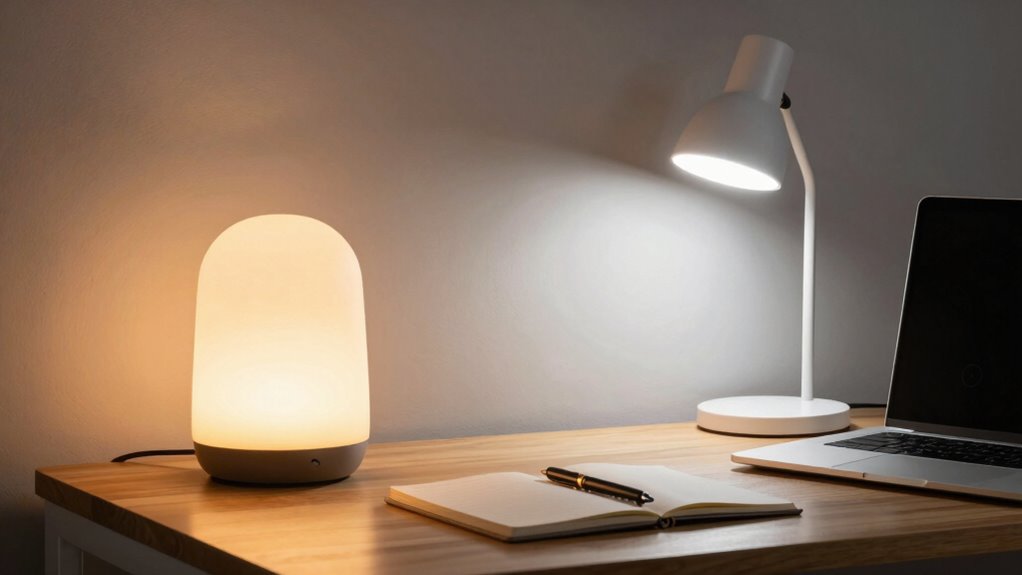
Desk lamps and circadian lamps serve different but equally important roles in your daily lighting environment. When choosing the right lighting for your space, understanding how each lamp impacts your comfort, productivity, and health is essential. Desk lamps primarily focus on providing targeted illumination for tasks like reading, writing, or working at your computer. They often feature adjustable brightness and direction, allowing you to customize your lighting to reduce eye strain. Circadian lamps, on the other hand, are designed to support your body’s natural biological rhythms by mimicking natural light patterns. They help regulate your sleep-wake cycle, especially during the darker months or if you work in environments with limited daylight.
Desk and circadian lamps support your daily routines through targeted and natural light.
One key aspect to evaluate when selecting either type of lamp is color temperature. For desk lamps, a cooler white light—around 4000K to 6500K—tends to enhance alertness and concentration, making them ideal for workspaces. These higher color temperatures resemble daylight and help reduce fatigue during long hours of task-focused activities. Conversely, circadian lamps often feature adjustable color temperatures that shift throughout the day. In the morning, they emit warmer, softer light (around 2700K to 3000K) to energize you, while in the evening, they transition to warmer tones that promote relaxation and prepare your body for sleep. This dynamic adjustment plays an essential role in supporting your natural circadian rhythms. Additionally, understanding the biological effects of light can help you optimize your lighting choices for better health. Incorporating spectral quality considerations can further enhance the effectiveness of circadian lighting by ensuring the light spectrum aligns with natural daylight. Being aware of light spectrum variations can also help you choose lighting that minimizes disruption to your sleep patterns. Moreover, selecting lighting with appropriate color rendering index (CRI) values can improve visual comfort and color perception in your workspace.
When evaluating your lighting options, don’t overlook energy efficiency. Modern LED lamps are the most energy-efficient choice across both categories, consuming less power while providing bright, high-quality illumination. They also have longer lifespans, reducing replacement costs and waste. For desk lamps, choosing models with energy-saving features ensures you get sufficient task lighting without a significant increase in electricity bills. For circadian lamps, energy efficiency becomes even more important because you might use them for extended periods, especially in the mornings and evenings. Many circadian lamps come with automatic timers or dimming features to optimize energy use while maintaining their biological benefits.
Ultimately, understanding how color temperature and energy efficiency influence your lighting choices helps you create an environment that supports productivity during the day and restful sleep at night. By selecting the right combination of desk and circadian lamps, you can craft a space that enhances your well-being, reduces energy costs, and adapts to your daily routines seamlessly.
As an affiliate, we earn on qualifying purchases.
Frequently Asked Questions
Are Circadian Lamps Suitable for Outdoor Use?
Circadian lamps are generally not suitable for outdoor use because they lack outdoor durability and weather resistance. You should look for lamps specifically designed for outdoor environments, as they can withstand rain, humidity, and temperature changes. Using a circadian lamp outside may damage the device and reduce its effectiveness. Always check the product specifications to verify it’s rated for outdoor use before placing it outside your home or workspace.
How Do I Clean and Maintain Desk and Circadian Lamps?
Your lamps are the shining heroes of your space, so treat them like royalty! To keep them glowing brilliantly, follow simple cleaning tips: regularly wipe with a soft, damp cloth, and avoid harsh chemicals. For maintenance routines, check the bulbs and wiring periodically, and replace or repair as needed. By caring for your desk and circadian lamps, you guarantee they’ll keep lighting up your life day after day!
Can These Lamps Help With Seasonal Affective Disorder?
Yes, these lamps can help with seasonal affective disorder by providing effective light therapy. When you use a circadian or desk lamp designed for light therapy, it can boost your mood and improve your overall well-being during darker months. By mimicking natural sunlight, these lamps help regulate your internal clock, making you feel more alert and happier, especially when natural sunlight is limited.
What Are the Energy Efficiency Differences Between Types?
LED lamps have clear advantages in energy efficiency, consuming less power than traditional incandescent or fluorescent options. They use considerably less power, which means lower electricity bills and less environmental impact. If you’re choosing between types, opt for LEDs for the best energy savings. Their reduced power consumption doesn’t compromise brightness or quality, making them ideal for desk or circadian lamps, helping you save energy while maintaining effective lighting.
Do These Lamps Emit Any Harmful Blue Light?
Yes, some desk and circadian lamps emit blue light, which can raise blue light concerns and impact your health. Excessive exposure may cause eye strain, disrupt sleep, or contribute to long-term health implications. To minimize risks, choose lamps with adjustable brightness or built-in blue light filters. Always be mindful of your exposure, especially during evening hours, to protect your eye health and maintain healthy circadian rhythms.
As an affiliate, we earn on qualifying purchases.
Conclusion
In the battle between desk lamps and circadian lamps, choosing the right one can transform your workspace and sleep quality. Remember, a good lamp is like a lighthouse guiding your productivity and well-being through the fog of fatigue. Investing in the right lighting isn’t just a small decision — it’s the secret weapon that can turn your daily routine into a powerhouse of comfort and efficiency. Brighten your space wisely, and watch your days shine brighter than ever!
color temperature adjustable desk lamp
As an affiliate, we earn on qualifying purchases.
As an affiliate, we earn on qualifying purchases.
As an affiliate, we earn on qualifying purchases.
Fall Picks
fall essentials
As an affiliate, we earn on qualifying purchases.