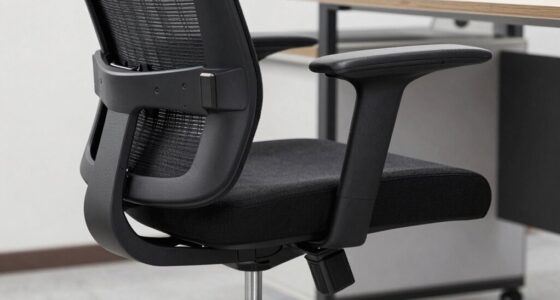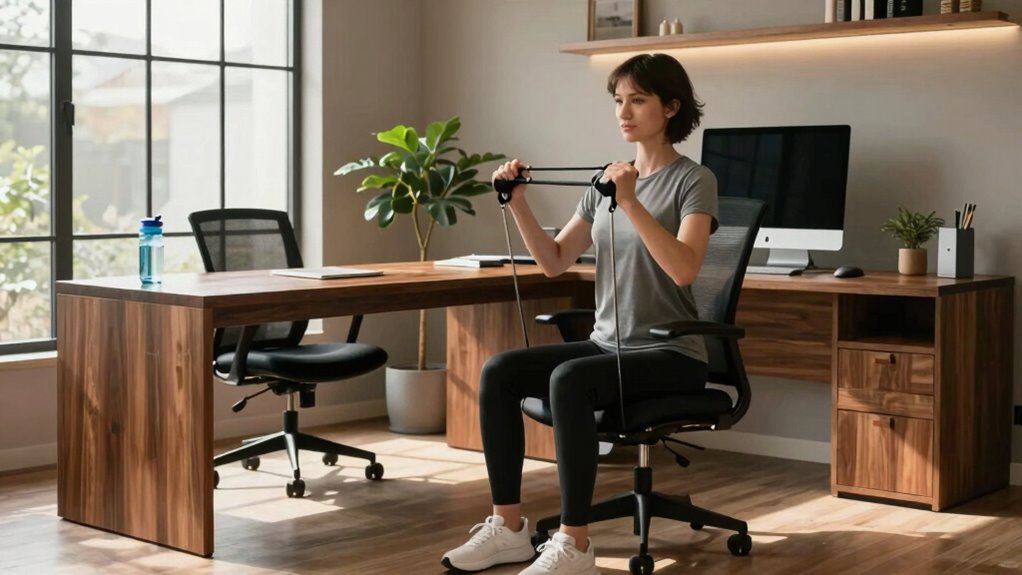

To build strength around a desk job, focus on ergonomic workspace adjustments and regular movement. Adjust your chair, monitor, and keyboard positions to support good posture and reduce strain. Take short breaks every 30 minutes to stretch and walk, incorporating simple exercises like shoulder rolls or leg lifts. Developing habits that prioritize movement and setting realistic goals can boost long-term strength and resilience. Keep exploring ways to stay active even during busy workdays to sustain your health and energy.

Get comfort and recovery gear delivered free — and shop member deals
- Fast, free delivery on millions of items
- Access to Prime Big Deal Days deals on October 6–7
- Prime Video, Amazon Music and more included
Key Takeaways
- Incorporate short, frequent movement breaks with stretches and light exercises to strengthen muscles and improve circulation.
- Use ergonomic workstations to promote natural movements and reduce strain during desk work.
- Practice targeted desk exercises, like leg raises and shoulder rolls, to build strength without leaving your workspace.
- Set realistic movement goals and develop routines that integrate strength-building habits into daily work.
- Maintain awareness of long-term health benefits to stay motivated and consistent in strengthening efforts around a desk job.
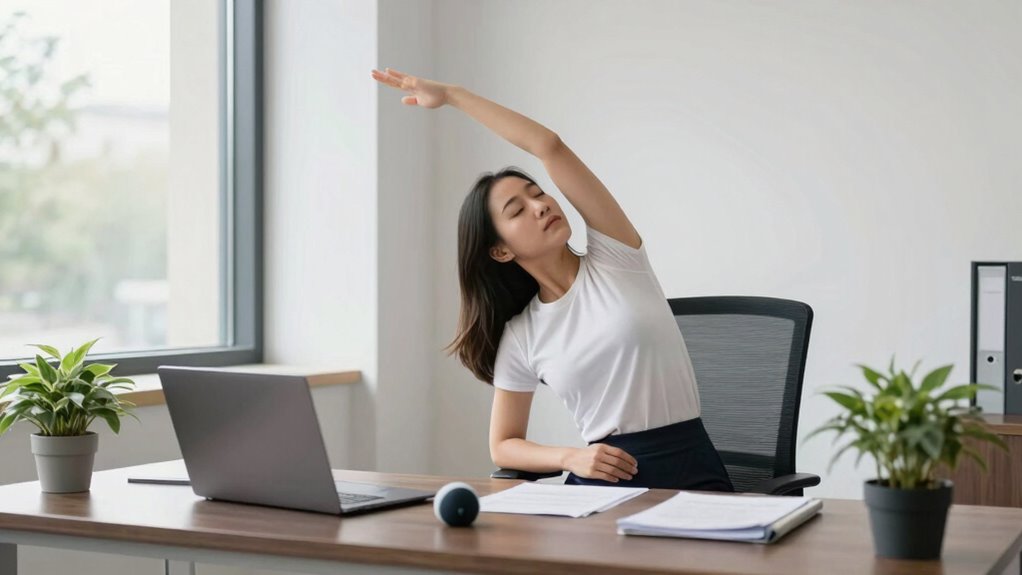
Many people working desk jobs struggle with muscle weakness and stiffness because they spend hours sitting without moving. When you’re glued to your chair all day, your muscles can weaken, and your posture deteriorates, leading to discomfort and long-term health issues. To combat this, making ergonomic adjustments to your workspace is essential. Proper chair height, monitor placement, and keyboard positioning can reduce strain, making it easier to maintain good posture. These changes help prevent tension from building up in your neck, shoulders, and back, easing stiffness and fostering comfort throughout the day.
But physical adjustments alone aren’t enough. Building strength around your desk job also requires mental resilience. Staying motivated to incorporate movement and exercise into your routine can be challenging, especially when deadlines pile up. Developing mental resilience means setting realistic goals, reminding yourself of the benefits of staying active, and creating habits that support your well-being. For example, taking short breaks every 30 minutes to stretch or walk around isn’t just good for your body—it also boosts your mental focus and productivity. Over time, these small habits become part of your daily routine, making it easier to stay committed.
Incorporating movement isn’t complicated. You can start with simple stretches at your desk, like shoulder rolls, neck stretches, or leg raises. Use ergonomic adjustments to position your workstation so that these movements are comfortable and natural. For instance, keep your feet flat on the floor, your computer monitor at eye level, and your arms supported at a 90-degree angle. These tweaks ensure that your body remains aligned, reducing fatigue and preventing injury. Additionally, standing desks or adjustable workstations give you the option to alternate between sitting and standing, further promoting muscle engagement and circulation. Understanding the importance of biographies and sports icons in entertainment can also serve as inspiration to stay active and motivated, as many sports figures exemplify strength and resilience.
Mental resilience plays a critical role in maintaining these healthy habits. When you face a busy workload, it’s tempting to skip breaks or ignore discomfort. But by cultivating resilience, you develop the discipline to prioritize your health, even during hectic days. Recognizing that biodiversity and conservation are vital for a sustainable future can inspire you to take care of your own well-being as part of a broader commitment to the environment. Building mental resilience also involves understanding the long-term health effects of sedentary work and taking proactive steps to counteract them. Developing an awareness of muscle weakness and stiffness caused by inactivity can help you better appreciate the importance of movement and motivate you to stay consistent. Reminding yourself of the long-term benefits—less pain, increased energy, improved focus—helps reinforce positive behavior. Over time, these practices become second nature, leading to stronger muscles, better posture, and enhanced overall well-being. Building strength around a desk job isn’t just about physical exercises; it’s about creating a mindset that values health and resilience amidst a busy schedule.
ergonomic adjustable standing desk
As an affiliate, we earn on qualifying purchases.
As an affiliate, we earn on qualifying purchases.
Frequently Asked Questions
How Often Should I Perform Strength Exercises During Work Hours?
You should aim to do desk exercise routines and strength exercises every hour during your workday. Break up long periods of sitting by taking a few minutes to stretch or perform simple exercises like seated leg lifts or shoulder rolls. An ergonomic workspace makes it easier to incorporate these movements without disrupting your flow. Regularly mixing in these quick routines enhances strength, reduces discomfort, and boosts focus throughout your workday.
Are There Specific Stretches for Preventing Desk-Related Back Pain?
Yes, there are specific stretches you can do to prevent desk-related back pain. Focus on stretches that promote good ergonomic posture, like gentle chest openers, shoulder rolls, and spinal twists. Incorporate these into your routine to release tension and improve flexibility. Maintaining proper office ergonomics, such as adjusting your chair and monitor height, also helps prevent back discomfort. Regular stretching alongside ergonomic adjustments keeps your back healthy and pain-free during long work hours.
Can Desk Exercises Replace Traditional Strength Training Routines?
Think of your desk as a garden, where small, consistent office fitness exercises plant seeds of strength. While desk exercises can supplement traditional routines, they shouldn’t replace them entirely. Maintaining ergonomic posture helps prevent injuries, but full strength development often requires targeted training. Use desk exercises to nurture your muscles, but for ideal growth, combine them with traditional strength workouts to cultivate a resilient, healthy body.
What Equipment Is Essential for Building Strength at a Desk?
You can build strength at your desk with just a few essentials, like ergonomic accessories and simple equipment. Invest in resistance bands for quick office workout routines, and use ergonomic accessories such as a supportive chair or sit-stand desk to improve posture. These tools help you incorporate strength-building exercises into your day, making it easier to stay active without disrupting your workflow. Just a little effort can lead to noticeable improvements.
How Do I Stay Motivated to Exercise Regularly at Work?
To stay motivated to exercise regularly at work, focus on the mental health benefits exercise brings, like reducing stress and boosting mood. Make ergonomic adjustments to your workspace to encourage movement and comfort. Set small, achievable goals, and remind yourself how exercise improves your overall well-being. Celebrate each milestone, and keep a routine that fits your schedule, making it easier to stay committed and motivated every day.
As an affiliate, we earn on qualifying purchases.
Conclusion
Remember, small, consistent efforts can reshape your strength and posture over time. While sitting at a desk might feel like a barrier, it’s actually an opportunity—you can build resilience right where you are. Believe in the power of these simple movements; they’re more than just exercises—they’re a statement that your health matters. Trust that with patience and dedication, you’re capable of transforming your daily routine into a powerful foundation for lasting strength.
ergonomic office chair with lumbar support
As an affiliate, we earn on qualifying purchases.
As an affiliate, we earn on qualifying purchases.
As an affiliate, we earn on qualifying purchases.
Halloween Picks
halloween
As an affiliate, we earn on qualifying purchases.