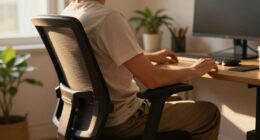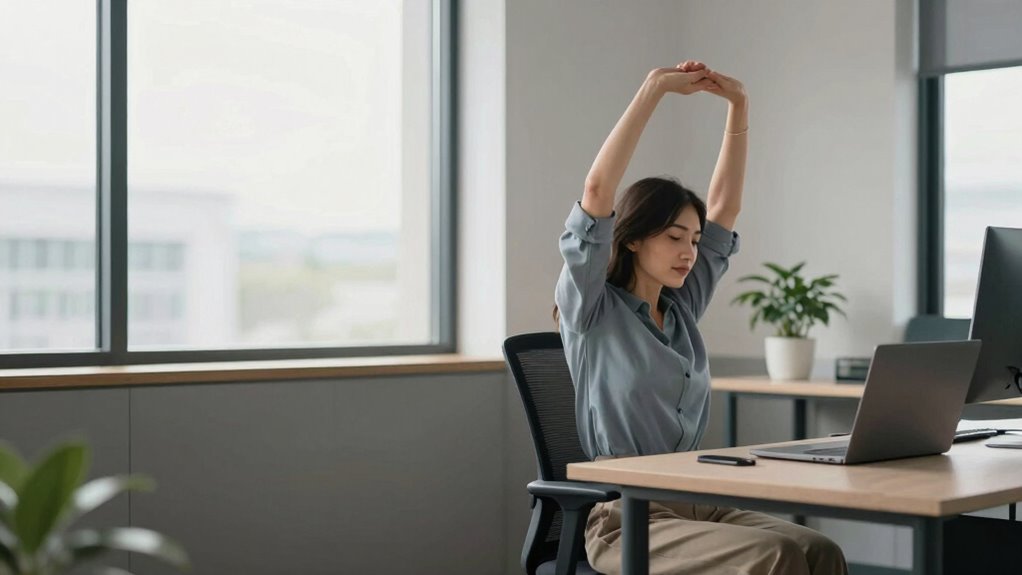
To stay comfortable and energized, alternate between sitting and standing throughout your day, starting with 15-30 minutes of standing each hour. Take short breaks every 30-60 minutes to stretch, walk, or do simple movements like ankle circles or shoulder shrugs. Use ergonomic accessories and incorporate intentional stretches to improve posture and blood flow. Developing these habits can boost your health and productivity—keep going to discover more effective movement strategies.

Get comfort and recovery gear delivered free — and shop member deals
- Fast, free delivery on millions of items
- Access to Prime Big Deal Days deals on October 6–7
- Prime Video, Amazon Music and more included
Key Takeaways
- Incorporate regular sit-stand cycles to improve circulation and reduce back discomfort.
- Take brief movement breaks every 30-60 minutes for stretching and walking.
- Use ergonomic accessories and practice proper posture to prevent strain.
- Perform small, deliberate movements like ankle circles and wrist stretches daily.
- Establish consistent movement routines to promote long-term comfort and prevent injuries.
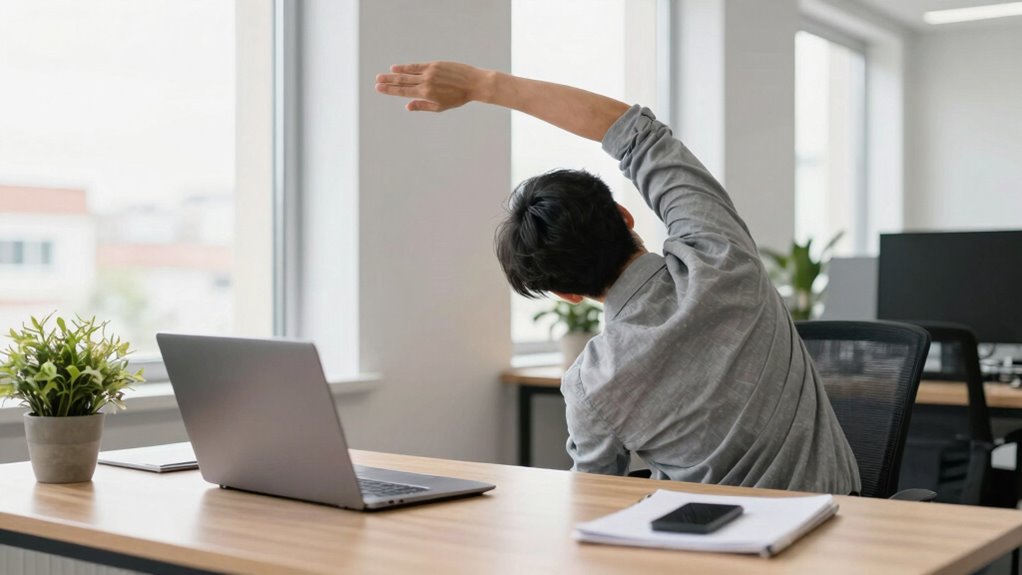
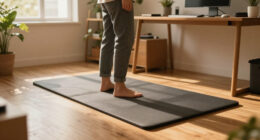
A key component of your movement pattern should include alternating between sitting and standing. The standing desk benefits are well-documented, offering improved circulation, reduced back pain, and increased alertness. Investing in a good standing desk allows you to switch positions throughout the day, preventing stiffness and fatigue. Start by standing for 15 to 30 minutes every hour, then gradually increase this interval as your body adapts. When you’re standing, focus on shifting your weight from one leg to the other, stretching your arms overhead, or doing gentle leg lifts. These small movements keep your muscles engaged and prevent stiffness.
In addition to changing your desk position, you should incorporate short movement breaks into your routine. Every 30 to 60 minutes, stand up, walk around, and stretch. Simple stretches like neck rolls, shoulder shrugs, and hamstring stretches can relieve tension accumulated from prolonged sitting. If possible, take a brief walk outside or around your office to boost circulation further and clear your mind. Even a few minutes of movement can *considerably* improve your focus and productivity.
To make this routine sustainable, set reminders or alarms that prompt you to move regularly. It’s easy to get caught up in work and forget to take breaks, but consistent movement is *vital*. Incorporating ergonomic accessories and movement patterns into your daily routine can help prevent discomfort and promote better posture, making it easier to stay active throughout the day. Regularly practicing ergonomic principles can also reduce the risk of repetitive strain injuries. Keep a pair of comfortable sneakers at your desk if you prefer walking or stretching in a different space. Incorporate small, deliberate movements into your day, such as ankle circles, wrist stretches, or seated torso twists, to keep blood flowing and muscles active. Over time, these habits will become second nature, helping you stay energized, reduce discomfort, and maintain better posture.
Frequently Asked Questions
How Often Should I Change My Sitting Position During the Day?
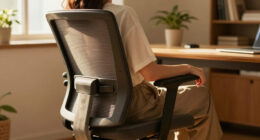
You should change your sitting position every 30 to 60 minutes to promote better posture awareness and reduce strain. Incorporate ergonomic accessories like adjustable chairs and footrests to support your movements. Regularly shifting positions helps prevent stiffness and discomfort. Remember, staying active during the day is key—stand, stretch, or walk briefly. This routine keeps your muscles engaged and maintains good ergonomics, ultimately improving comfort and productivity.
Are There Specific Stretches That Prevent Neck and Shoulder Pain?
Yes, incorporating neck stretches and shoulder rolls into your routine can help prevent neck and shoulder pain. Start with gentle neck stretches, tilting your head side to side and forward, then do shoulder rolls to loosen tension. Repeat these movements regularly, stretching and rolling to release tightness, improve flexibility, and promote circulation. Consistent practice guarantees you maintain comfort, reduce pain, and stay energized throughout your workday.
What Equipment Can Improve Movement for Desk Workers?
Using ergonomic accessories like adjustable keyboard trays, lumbar support cushions, and monitor stands can substantially improve your movement at work. A standing desk allows you to switch between sitting and standing, reducing strain and promoting better circulation. Incorporate these tools into your daily routine to encourage movement, prevent discomfort, and boost productivity. Prioritizing ergonomic accessories and a standing desk helps you stay active and comfortable throughout your workday.
How Does Movement Impact Mental Focus and Productivity?
Movement boosts your mental focus and productivity by increasing blood flow, which enhances mental clarity. When you incorporate mindfulness exercises during movement, you become more aware of your body and breath, reducing stress and sharpening your concentration. Regular activity also breaks up long periods of sitting, preventing mental fatigue. By staying active throughout the day, you support clearer thinking, better decision-making, and sustained productivity, making your work more efficient and satisfying.
Can Movement Patterns Reduce Long-Term Health Risks From Desk Work?
Like a shield protecting a knight, movement patterns can guard your health from long-term risks. By maintaining ergonomic posture and incorporating seated aerobics, you reduce strain, improve circulation, and lower the chances of chronic issues like back pain or cardiovascular problems. Regular movement not only benefits your body but also sustains your energy and focus, ensuring you stay healthier and more productive over time.
Conclusion
By following this daily movement pattern, you’ll keep your body active and prevent the aches that come with sitting all day. Remember to take regular breaks, stretch like a Renaissance artist, and move intentionally. It’s a simple routine that can transform your workday into a healthier, more energized experience. So, don’t wait for a knight in shining armor—grab your hourglass and start moving today to stay fit amidst your modern hustle!
Fall Picks
fall essentials
As an affiliate, we earn on qualifying purchases.