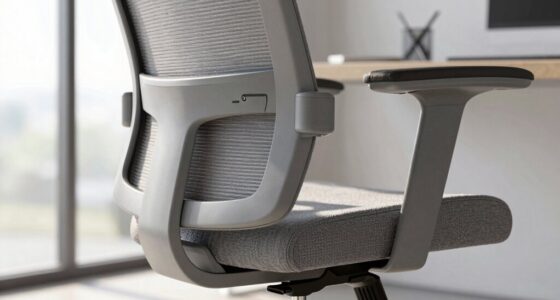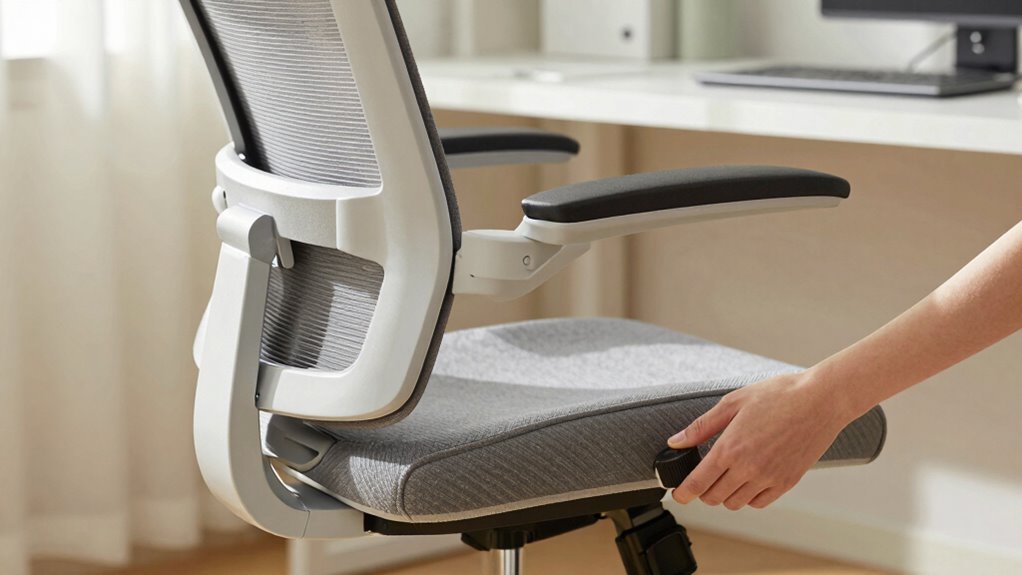

You might be overlooking your chair’s armrests, but properly adjusting them can do more than support your arms—it’s a key to better posture and long-term comfort. When you set the armrests at the right height so your elbows are roughly at a 90° angle, you reduce shoulder tension and prevent slouching. Consistent fine-tuning encourages an upright spine and less fatigue. Keep adjusting regularly to maximize these benefits; you’ll be surprised by what more you can improve.
Listen free for 30 days with Audible
Thousands of audiobooks and originals — cancel anytime.
As an affiliate, we earn on qualifying purchases.
Key Takeaways
- Adjustable armrests improve overall posture and reduce shoulder, neck, and upper back strain.
- Proper armrest height supports neutral elbow and wrist positions, preventing discomfort during extended work.
- Regularly fine-tuning armrests encourages upright sitting and minimizes slouching.
- Using adjustable armrests promotes musculoskeletal health beyond just lumbar support.
- Small adjustments to armrests can significantly enhance comfort, productivity, and long-term injury prevention.
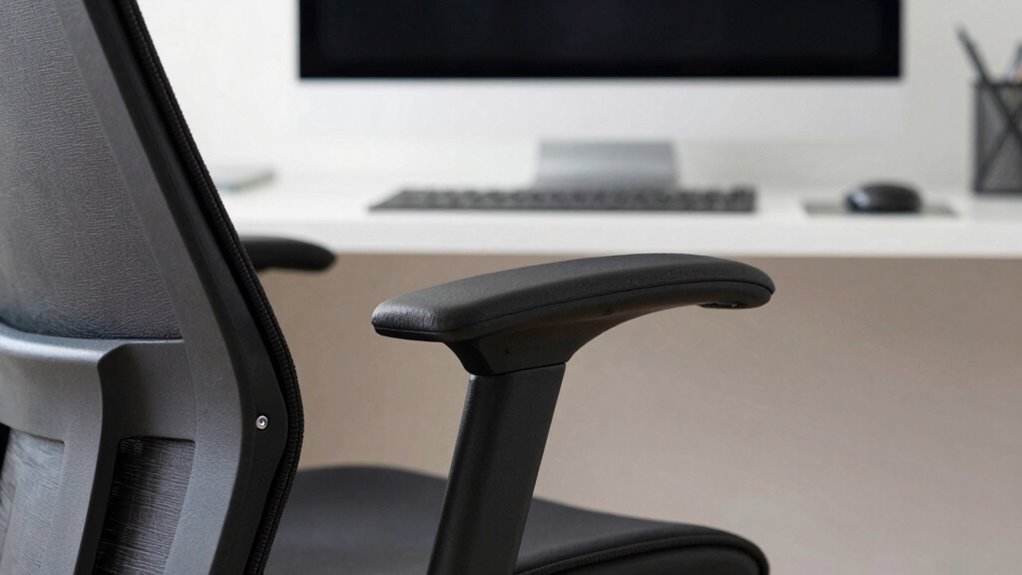
Have you ever overlooked the importance of properly adjusting your chair? Many people focus on seat height or lumbar support, but there’s a simple adjustment that can dramatically improve your comfort and productivity: the use of adjustable armrests. While often underused, these features play a critical role in maintaining ergonomic posture throughout your workday.
Adjustable armrests help reduce strain on your shoulders, neck, and upper back. When set correctly, they allow your arms to rest comfortably, keeping your shoulders relaxed and preventing unnecessary tension. This not only minimizes discomfort but also helps you maintain a healthier ergonomic posture. Instead of hunching forward or craning your neck, you can keep your head aligned with your spine, reducing fatigue and the risk of repetitive strain injuries.
Properly adjusted armrests keep shoulders relaxed, prevent tension, and support a healthy ergonomic posture.
Many chairs come with adjustable armrests, but people rarely bother to fine-tune them. They tend to leave them in the default position, missing out on the benefits of proper alignment. When adjusting your armrests, ensure they are at a height where your elbows sit comfortably at a 90-degree angle or slightly more open. Your forearms should rest naturally on the armrests without raising or lowering your shoulders. This positioning supports a neutral wrist position, which is vital for preventing carpal tunnel syndrome and other repetitive motion issues.
In addition to supporting your arms, adjustable armrests can influence your overall ergonomic posture. With the arms properly supported, you’ll find it easier to sit upright without slouching. This encourages a more neutral spine position, which is essential for avoiding long-term back problems. If your chair’s armrests are too high or low, they can cause you to hunch forward or lean to one side, disrupting your posture and leading to discomfort over time. Regularly adjusting ergonomic features like armrests can help maintain optimal comfort and health. Making these adjustments also contributes to musculoskeletal disorder prevention, which is a common consequence of poor seating habits. Being mindful of these adjustments aligns with ergonomic principles that promote long-term health.
The key is to take a moment each day to adjust your chair’s armrests to fit your body perfectly. Don’t just set them and forget; check periodically as your seating position or work habits change. When your armrests are correctly positioned, you’ll notice less tension in your shoulders, fewer aches in your neck, and an overall improvement in your ergonomic posture. It’s a small adjustment with a big impact, and one that’s often overlooked but can significantly enhance your comfort and health during long work hours.
adjustable ergonomic office chair armrests
As an affiliate, we earn on qualifying purchases.
As an affiliate, we earn on qualifying purchases.
Frequently Asked Questions
Can Adjusting the Chair Improve Overall Posture?
Yes, adjusting your chair can considerably improve your overall posture. By fine-tuning seat height, backrest, and armrests, you promote better spinal alignment and support proper posture correction. When your chair fits your body, you reduce strain and prevent discomfort. Regularly adjusting your chair guarantees consistent spinal support, helping you maintain healthy habits and avoid long-term issues related to poor posture.
Is This Adjustment Suitable for Ergonomic Health?
Ever wonder if this simple adjustment truly benefits your ergonomic health? Yes, it’s highly suitable for improving ergonomic compatibility, as it helps you maintain proper posture and reduces strain. Adjusting your chair correctly can positively impact your health implications by preventing discomfort and long-term injuries. Incorporate this little tweak into your routine, and you’ll find your workspace more comfortable and supportive, promoting better overall well-being.
How Often Should I Readjust the Chair?
You should readjust your chair whenever you notice discomfort or poor posture, aiming for a comfortable, supported position. Regularly changing your seat height, backrest angle, and armrest position helps maintain personal comfort and prevents strain. Adjustment frequency depends on your activities and how often you shift positions. Make small tweaks throughout the day to stay ergonomic, ensuring your chair supports you effectively without causing unnecessary tension or fatigue.
Does This Adjustment Benefit All Chair Types?
This adjustment isn’t a one-size-fits-all hat; it benefits most chair types, but chair design and your preferences matter. Think of it as a versatile tool in your ergonomic toolkit. Whether your chair has adjustable lumbar support or not, using this feature helps align your posture better and reduces discomfort. Experiment with it to see how it complements your seating style—your back will thank you.
Are There Risks in Overusing This Adjustment?
Overusing this adjustment can pose ergonomic misconceptions, leading you to assume it’s a cure-all. While it’s generally safe, excessive tweaking might cause discomfort or strain, especially if it’s not aligned properly. To guarantee adjustment safety, make small, gradual changes and listen to your body. Remember, moderation is key. If you experience pain or persistent discomfort, consult an ergonomic specialist to avoid risking injury or poor posture.
As an affiliate, we earn on qualifying purchases.
Conclusion
Don’t overlook that small adjustment—sometimes, it’s the subtle shifts that make all the difference. By paying a little more attention to your chair’s finer settings, you might discover a hidden boost to your comfort and posture. It’s a quiet change that could quietly transform your day, helping you stay energized and focused. So, next time you sit down, give that underused feature a gentle nudge—you just might find your workspace magic.
best adjustable armrest for desk chair
As an affiliate, we earn on qualifying purchases.
As an affiliate, we earn on qualifying purchases.
ergonomic chair with customizable armrests
As an affiliate, we earn on qualifying purchases.
As an affiliate, we earn on qualifying purchases.
NFL season / tailgating Picks
team gear
As an affiliate, we earn on qualifying purchases.