TL;DR

Get comfort and recovery gear delivered free with Prime
- Fast, free delivery on millions of items
- Prime Video, Amazon Music and more included
- Member-only deals all year
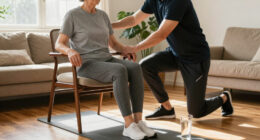
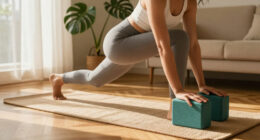
Physiotherapist and Pilates instructor Helen O’Leary shared four standing exercises for people who struggle with floor-based workouts. The moves target mobility, balance and core stability, and can be done with a nearby surface for support.
A physiotherapist and Pilates instructor has recommended four standing Pilates moves for people who find it difficult to exercise on the floor, offering an upright alternative that can be adapted with support from a chair, table or counter, much like low-impact home Pilates exercises. Helen O’Leary, clinical director at Complete Pilates, told Fit&Well that standing exercises can challenge core strength, balance and mobility in ways that differ from mat-based movements, similar to how Pilates moves can build strength and improve posture.
O’Leary’s suggested sequence includes a standing book opener, a scooter movement, marching and standing hip abduction. The exercises are presented as options to try at home, with repetitions and rounds specified for each. Fit&Well’s report does not establish that they are suitable for every person or provide research comparing their effects with floor-based Pilates.
For the book opener, stand with feet hip-width apart and hands behind the head, then rotate the rib cage and head to each side, a movement that complements Pilates routines for improving posture. O’Leary recommends keeping the pelvis facing forward to increase the turning sensation. The report suggests three sets of four to five repetitions per side, with a couple of breaths before switching sides.
The scooter exercise uses a slight hip hinge and a controlled slide of one foot backward and forward while the toes remain on the floor. The report recommends three rounds of 10 to 15 repetitions per side. For marching, stand on one leg, lift the other, lower it and switch; O’Leary suggests using a sturdy surface for balance. Standing hip abduction involves lifting a straight leg out to the side, lowering it when balance starts to go, and repeating up to 10 times before changing sides.
A Standing Option for Home Workouts
The exercise list addresses a practical barrier: some people may find getting down to and up from the floor uncomfortable, difficult or inconvenient. Standing variations offer a way to practise movement without taking a mat, though the report does not say they replace all forms of Pilates or are appropriate for every mobility or health need.
The moves also vary in their balance demands. O’Leary says marching works the hips and lower body while requiring the core to help keep the body upright. Using a stable support can make the movements more manageable, but readers should keep the range of motion controlled and stop if a movement causes pain, dizziness or unusual discomfort.
Products Worth Considering

Blueair Blue Pure 511i Max Air Purifier for Home and Bedroom

LG C2 Series 65-Inch OLED evo 4K Smart TV (OLED65C2PUA, 2022)

Dyson Purifier Hot+Cool HP1
As an affiliate, we earn on qualifying purchases.
How the Four Moves Are Set Up
Pilates is often associated with mat sessions or reformer equipment, but the Fit&Well report describes standing exercises as another format. O’Leary says staying upright can challenge the core differently from floor-based movements and may encourage attention to posture, particularly for people who spend long periods sitting. Those are her explanations, not measured outcomes reported in the article.
The instructions call for limited equipment. A chair, table or high countertop can provide support for the balance exercises. For the scooter, the report suggests wearing a sock or placing a towel beneath the moving foot on a wooden floor so it can slide. The suggested routines are framed as home exercises rather than a formal treatment plan.
“Standing Pilates exercises might sound as though they’re easy, but they test you in many ways that floor-based moves won’t.”
— Helen O’Leary, physiotherapist and clinical director at Complete Pilates, speaking to Fit&Well
Who Should Adapt the Exercises
The report does not give a publication date, cite studies measuring the exercises’ effects, or specify who should avoid them. It also does not assess whether the routine is appropriate for people with injuries, pain, balance impairments or other health concerns. The moves are recommendations from O’Leary, not a personalised assessment or a guarantee of improved posture, strength or mobility.
Readers who are unsure whether a movement is suitable for them, particularly those with a pre-existing condition or a recent injury, should seek guidance from a qualified health professional. The source does not set out formal safety screening or a progression plan.
Start Gently and Use Support
The report does not announce a follow-up study, class or additional programme. Its practical next step is to try the movements at a controlled pace, using a stable surface when needed and staying within a comfortable range. For the hip-abduction move, the instructions say the leg may not travel far at first and recommend lowering it when balance begins to falter.
Anyone testing the sequence should treat the listed repetitions as the report’s suggested routine, rather than a requirement to push through discomfort. Whether standing Pilates works better for an individual than floor-based exercise depends on their needs and circumstances; the source provides no comparison or outcome data.
Key Questions
Which standing Pilates moves did Helen O’Leary recommend?
O’Leary recommended a standing book opener, scooter, marching and standing hip abduction. Fit&Well’s report includes instructions and suggested repetitions for each.
Do I need equipment for these exercises?
The movements require little or no specialist equipment. A chair, table or countertop can provide support for balance; the scooter may be easier on a smooth floor with a sock or towel beneath the moving foot.
Are standing Pilates exercises suitable for everyone?
The report does not assess individual suitability. People with pain, an injury, balance difficulties or a pre-existing condition should seek advice from a qualified health professional before trying unfamiliar exercises.
What benefits does the instructor say the exercises may support?
O’Leary says standing Pilates can challenge core strength and balance; the report presents the four moves as exercises for mobility, balance and core stability. It does not provide measured results or evidence that everyone will experience those effects.
Source: fitandwell.com