One of the most overlooked reasons your feet feel restless at a desk is your footwear and ergonomic setup. Tight shoes or high heels can restrict circulation, making you uncomfortable and twitchy, while loose shoes may cause instability and constant adjustment. Poor ergonomic support, like an unsuitable chair or improper footrest, can also contribute to foot discomfort. Addressing these issues helps improve circulation and reduce restlessness. Keep exploring to discover more ways to create a comfortable workspace that keeps your feet calm.

Get comfort and recovery gear delivered free — and shop member deals
- Fast, free delivery on millions of items
- Access to Prime Big Deal Days deals on October 6–7
- Prime Video, Amazon Music and more included
Key Takeaways
- Poorly fitted footwear, especially tight shoes or high heels, can restrict circulation, causing restlessness in the feet.
- Misaligned ergonomic setups and lack of foot support lead to muscle tension and increased foot movement.
- Insufficient movement breaks and absence of footrests contribute to stagnant feet and jitteriness.
- Physical discomfort from improper footwear or workspace setup often masks underlying stress or anxiety.
- Overlooking small ergonomic adjustments can perpetuate foot discomfort and restless movements during desk work.
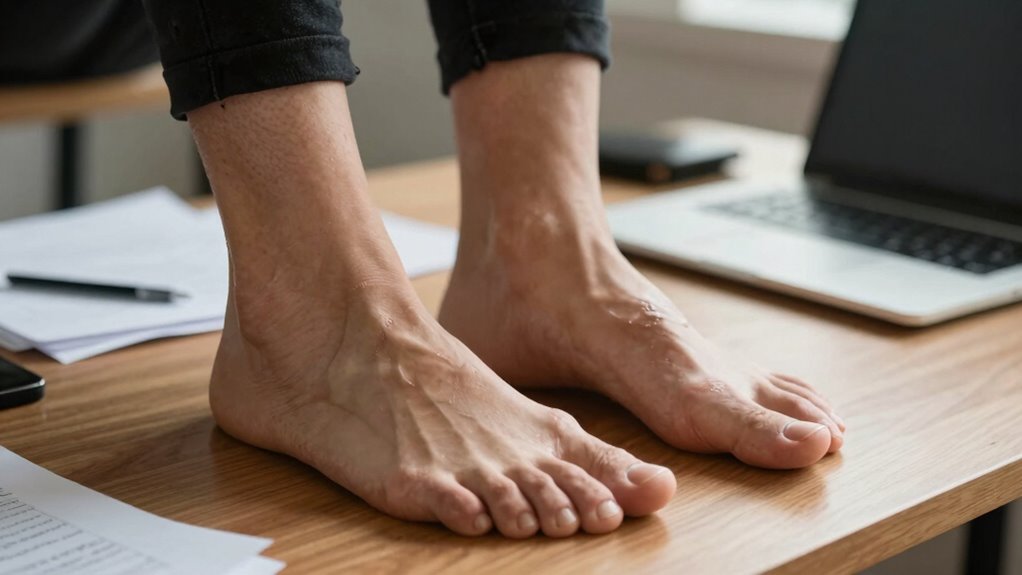
If you find yourself constantly shifting or jiggling your feet while sitting at your desk, you’re not alone. Restless feet are a common issue, and many people assume it’s just nervous energy or boredom. However, one of the most overlooked reasons behind this discomfort is related to your footwear choices and the ergonomic setup of your workspace. Often, the shoes you wear and how your desk is arranged can greatly influence your foot comfort and restlessness.
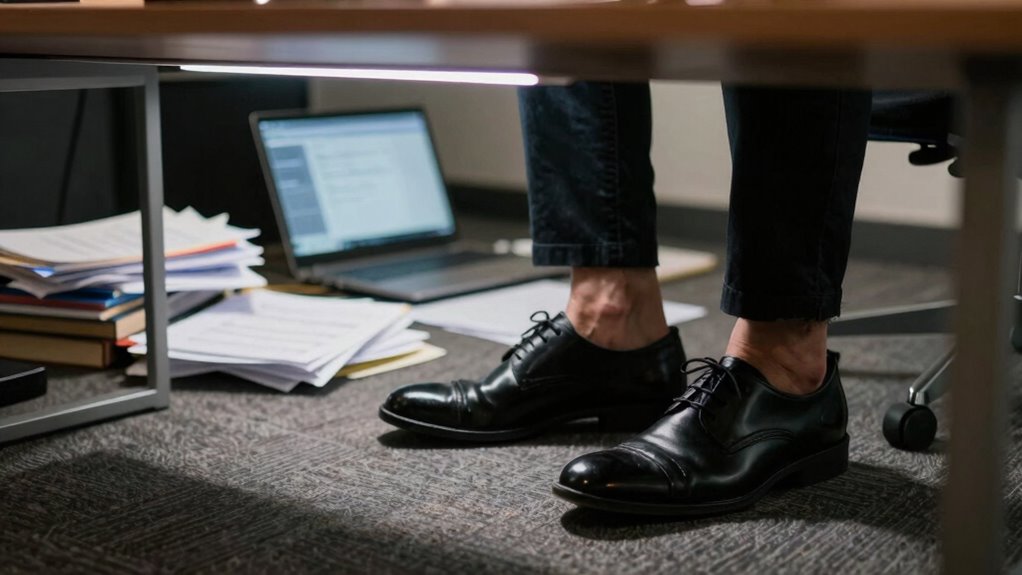
Your footwear choices play a essential role. Wearing tight or unsupportive shoes can restrict circulation and cause discomfort, prompting you to move your feet constantly. High heels, for example, put pressure on certain areas and can make your feet feel cramped, leading to fidgeting. Conversely, wearing overly loose shoes might cause your feet to slide around, creating a feeling of instability that makes you want to keep adjusting them. The key is to opt for comfortable, supportive footwear designed for long periods of sitting, such as cushioned flats or sneakers with arch support. If you work at a desk for hours, switching to appropriate footwear that promotes good circulation can reduce the urge to move your feet excessively.
Choosing supportive, comfortable shoes helps reduce foot discomfort and minimizes restless movement during long desk hours.
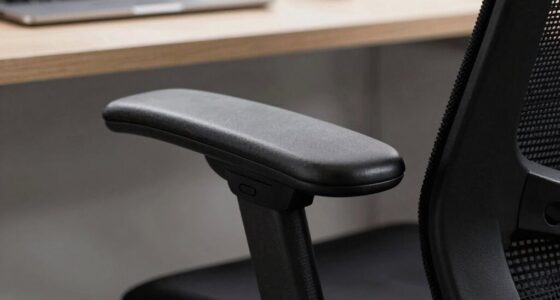
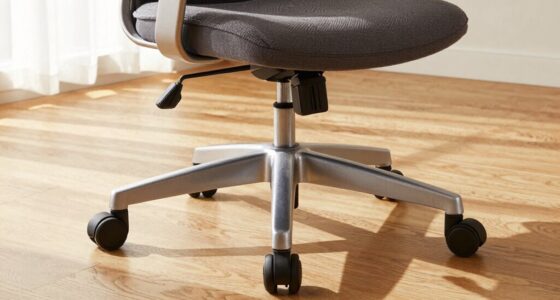
In addition to footwear, ergonomic accessories are often overlooked but are essential for reducing restlessness. An adjustable footrest, for example, allows you to keep your feet supported and at a comfortable height, which can alleviate pressure and improve blood flow. When your feet are well-supported, you’re less likely to feel the need to jiggle or bounce them. Ergonomic chairs and desk setups that promote proper posture also help by reducing overall tension in your legs and feet. If your workspace isn’t aligned to your body’s needs, your muscles may become strained, leading to discomfort and fidgeting. Sometimes, addressing ergonomic setup and ensuring proper support can significantly reduce restless movements. Additionally, incorporating movement breaks into your routine can help alleviate muscle tension and improve circulation, further reducing foot restlessness. Paying attention to foot support and how your footwear interacts with your workspace can also play a crucial role in minimizing discomfort.
Sometimes, the problem isn’t just physical but also related to your mental state. Restless feet can be a sign of underlying stress or anxiety. But even if that’s the case, adjusting your footwear choices and using ergonomic accessories can help create a more comfortable environment. When you’re physically comfortable, your mind is less likely to seek outlets for nervous energy through constant movement. Recognizing the importance of physical comfort can be a key step towards addressing the issue holistically.
Ultimately, paying attention to the small details—like what you wear on your feet and how your workspace is set up—can make a big difference. Instead of dismissing your restless feet as mere impatience or boredom, consider whether your footwear choices and ergonomic accessories might be causing or exacerbating the issue. Making simple adjustments can lead to a more comfortable, focused workday with fewer distractions from unnecessary foot jiggling.
As an affiliate, we earn on qualifying purchases.
Frequently Asked Questions
Can Dehydration Cause Restless Feet at a Desk?
Yes, dehydration can cause restless feet at a desk. When you don’t stay properly hydrated, your hydration habits suffer, leading to an imbalance in electrolytes like potassium and magnesium. This electrolyte imbalance can trigger muscle cramps and restless sensations in your feet. To prevent this, drink enough water throughout the day and maintain good hydration habits, ensuring your electrolyte balance stays in check and reducing discomfort during long periods of sitting.
How Does Caffeine Intake Influence Restless Leg Movements?
Caffeine intake can increase restless leg movements, especially if you’re sensitive to it. Consuming too much caffeine may cause sleep disruption, making symptoms worse. If you suddenly cut back or experience caffeine withdrawal, you might notice increased restlessness as your body adjusts. To minimize these effects, try reducing caffeine gradually and avoid it close to bedtime, allowing your legs and sleep patterns to stabilize naturally.
Are There Specific Desk Setups That Reduce Foot Restlessness?
You might notice that an ergonomic design with adjustable footrests and proper foot positioning can considerably reduce foot restlessness. When your desk setup aligns with your body’s natural posture, your feet stay comfortable and relaxed. Consider a footrest that supports your arches and keeps your feet flat. This coincidence of thoughtful setup and natural foot position helps prevent restless movements, making your workday more comfortable and focused.
Can Certain Medications Contribute to Restless Feet During Work?
Yes, certain medications can contribute to restless feet during work. You might experience this due to medication side effects, which affect your nervous system or circulation. Drug interactions between multiple medications can also heighten restlessness. If you notice increased foot movement after starting a new medication, consult your healthcare provider. They can adjust your dosage or suggest alternatives to help reduce this uncomfortable symptom.
Does Stress or Anxiety Worsen Foot Restlessness at a Desk?
Think of your body like a car engine; stress triggers and anxiety symptoms can cause it to overheat, making your feet restless. When you’re anxious or stressed, your nervous system becomes hyperactive, intensifying foot discomfort. This heightened state amplifies restlessness, especially during desk work. So, yes, stress and anxiety can considerably worsen foot restlessness, turning simple sitting into a frustrating experience. Managing stress might just help keep your feet still.
supportive office shoes for long sitting
As an affiliate, we earn on qualifying purchases.
As an affiliate, we earn on qualifying purchases.
Conclusion
So, next time your feet start bouncing like restless birds, remember it might be your body’s way of signaling a need for movement—like a clock ticking for a break. Staying seated too long creates tension and discomfort, so don’t ignore those signals. Incorporate small walks or stretches into your day to keep your feet happy and your mind sharp. After all, a little movement is the key to preventing your feet from becoming as restless as a swarm of bees.
As an affiliate, we earn on qualifying purchases.
ergonomic office chair with foot support
As an affiliate, we earn on qualifying purchases.
As an affiliate, we earn on qualifying purchases.
Evergreen bestsellers Picks
bestsellers
As an affiliate, we earn on qualifying purchases.