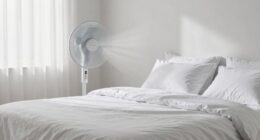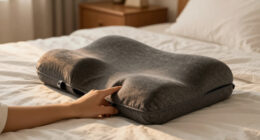
Cooling your room alone won’t guarantee comfortable sleep if you don’t also manage humidity and your sleep posture. Too much humidity can make the air feel muggy and cause sweating, while dry air dries out your skin and nasal passages. Poor sleep posture can cause discomfort even if it’s cool enough. To truly improve your sleep, you need a balanced environment with proper temperature, humidity, and support. Keep going to discover how these factors work together.

Get comfort and recovery gear delivered free with Prime
- Fast, free delivery on millions of items
- Prime Video, Amazon Music and more included
- Member-only deals all year
Key Takeaways
- Cooling without humidity control can cause excessive dryness, leading to nasal congestion and skin irritation.
- Low humidity from cooling may dry out nasal passages, making breathing uncomfortable and disrupting sleep.
- Overly cool environments combined with high humidity can cause sweating and stickiness, reducing comfort.
- Cooling alone doesn’t address poor sleep posture, which can cause discomfort regardless of temperature.
- Proper sleep comfort depends on balancing temperature, humidity, and posture, not just cooling.

When the heat rises, getting a good night’s sleep can become a challenge. You might think that turning down the thermostat or using a fan will do the trick, but sometimes, even when it’s cool outside, sleep still eludes you. That’s because “cooling” isn’t just about temperature; it involves managing bedroom humidity and your sleep posture, both of which play vital roles in comfort. If the air feels dry or damp, it can disrupt your breathing and cause discomfort that keeps you tossing and turning. Too much humidity makes the room feel muggy and oppressive, while too little can dry out your skin and nasal passages, making it harder to breathe comfortably. Achieving the right humidity level, around 40-60%, creates a more balanced environment that promotes restful sleep.
Managing bedroom humidity is key to comfortable, restful sleep—aim for 40-60% for optimal breathing and relaxation.
Another factor often overlooked is sleep posture. Even if your room is perfectly cool and humidity levels are just right, poor sleep posture can cause discomfort and prevent you from slipping into deep sleep. Sleeping in an awkward position can strain your neck, shoulders, or back, leading to stiffness and pain that wake you up repeatedly throughout the night. Proper sleep posture supports spinal alignment and reduces pressure points, helping you stay comfortable and relaxed. When your body is properly aligned, you breathe more easily, contributing to better sleep quality. It’s essential to find a position that keeps your head, neck, and spine in a natural line, whether that’s on your back with a supportive pillow or on your side with a pillow between your knees. Additionally, bedroom environment factors such as airflow and bedding materials can influence overall comfort levels. Ensuring good ventilation helps regulate indoor air quality and prevents the buildup of allergens that can interfere with sleep. Proper ventilation also helps control room temperature more effectively, making cooling efforts more efficient. A well-ventilated room can also help maintain the optimal humidity levels, reducing the risk of discomfort caused by too dry or too damp air. Incorporating air purifiers or dehumidifiers can further improve sleep conditions, especially in areas with high humidity or airborne allergens.
Even when you try to cool your room, neglecting these other factors can leave you feeling restless. For instance, a cool room with high humidity can make you sweat and feel sticky, defeating the purpose of cooling. Conversely, a room that’s dry can cause nasal congestion and dry skin, leading to discomfort. You also need to pay attention to your sleep posture, as tossing and turning because of body aches or discomfort can negate any benefits from a cooler environment. Adjusting your sleep position or investing in ergonomic pillows can make a significant difference.
In the end, cooling isn’t just about lowering the temperature. Achieving comfortable sleep involves controlling bedroom humidity and maintaining good sleep posture. When these elements work together, you’re more likely to drift off easily and stay asleep through the night. Remember, a truly restful sleep environment balances all these factors, so you wake up feeling refreshed rather than exhausted, ready to face a new day.
Products Worth Considering

Levoit Core 400S-P Smart Air Purifier for Large Rooms

LEVOIT Vital 200S-P Smart Air Purifier for Large Rooms

Coway Airmega 250 Air Purifier for Large Rooms
As an affiliate, we earn on qualifying purchases.
Frequently Asked Questions
Can Cooling Pillows Improve Sleep Quality?
Yes, cooling pillows can improve your sleep quality by helping with temperature regulation. The pillow material plays an essential role; materials like gel-infused memory foam or breathable latex promote airflow, keeping your head cool. When your pillow maintains a stable, comfortable temperature, you’re less likely to toss and turn, leading to deeper, more restful sleep. So, if overheating disrupts your sleep, a cooling pillow might be a worthwhile upgrade.
Do Cooling Mattresses Help With Night Sweats?
Ever wondered if cooling mattresses can help with night sweats? They can, by improving temperature regulation and creating a more comfortable sleep environment. Cooling mattresses are designed to dissipate heat and wick away moisture, which helps reduce the discomfort of night sweats. So, if you’re struggling with excessive sweating during sleep, investing in a cooling mattress might just help you stay cooler and sleep more peacefully all night long.
How Does Humidity Affect Cooling Sleep Products?
Humidity critically impacts cooling sleep products because high humidity levels hinder moisture control and humidity regulation. When it’s humid, sweat doesn’t evaporate efficiently, making you feel sticky and uncomfortable, even on cooling mattresses. Conversely, low humidity helps these products work better by promoting moisture evaporation. To optimize your sleep, make sure your room maintains balanced humidity levels, allowing cooling features to function effectively and helping you stay comfortable throughout the night.
Are Cooling Sheets Suitable for All Skin Types?
Cooling sheets can be suitable for most skin types, but if you have sensitive skin, you should check product compatibility before buying. Look for sheets made from hypoallergenic or natural materials like cotton or bamboo, which tend to be gentler. If you notice irritation or discomfort, discontinue use and consult a dermatologist. Choosing the right cooling sheets helps guarantee comfort and minimizes skin sensitivity issues during sleep.
What Are the Long-Term Effects of Using Cooling Devices?
Sure, cooling devices might promise better sleep, but long-term use can disrupt your natural temperature regulation. Instead of improving your sleep environment, they might make your body rely too much on external help, potentially affecting your ability to regulate temperature naturally over time. Ironically, constant cooling can hinder your body’s comfort, making you depend on devices rather than learning to sleep comfortably at your natural temperature.
Conclusion
Remember, cooling your room doesn’t automatically guarantee cozy comfort. Cooler air can cause discomfort if your bedding isn’t breathable or if your body’s needs aren’t met. Don’t dismiss the delicate dance between temperature, texture, and tranquility. Find your perfect balance by blending breathable blankets, proper ventilation, and personalized preferences. Embrace the experience of a truly tranquil, temperature-tuned night, and turn your sleep into a serene, satisfying sanctuary where coolness comfortingly cradles you into restful dreams.