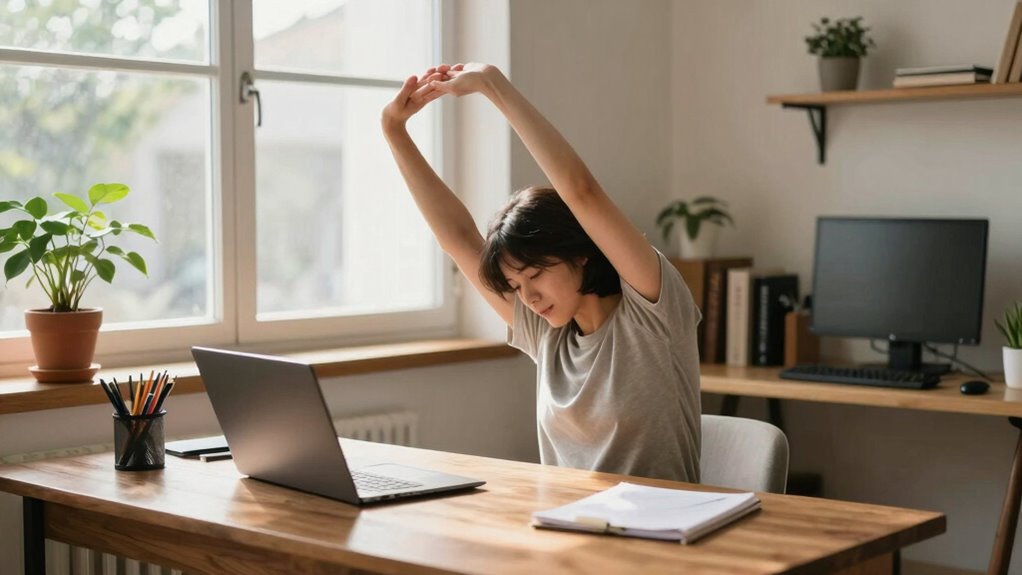

To keep comfortable during long desk days, incorporate a gentle mobility flow focused on small, mindful movements. Support your posture with an ergonomic chair, keep your monitor eye level, and stay connected with breath awareness. Add simple stretches like shoulder rolls, neck stretches, and seated twists to improve circulation and reduce stiffness. Creating a routine with these mindful movements not only eases tension but boosts focus. Keep exploring to discover more tips that keep you comfortable and energized throughout your day.

Get comfort and recovery gear delivered free — and shop member deals
- Fast, free delivery on millions of items
- Access to Prime Big Deal Days deals on October 6–7
- Prime Video, Amazon Music and more included
Key Takeaways
- Incorporate brief, seated stretches like neck tilts, shoulder rolls, and spinal twists to relieve tension during long desk sessions.
- Focus on mindful breathing pauses between movements to enhance relaxation and body awareness.
- Maintain ergonomic workspace setup to support proper posture and reduce physical strain.
- Add calming greenery and ensure good air quality to create a soothing environment conducive to gentle movement.
- Integrate movement routines regularly to prevent discomfort and promote sustained well-being throughout the day.
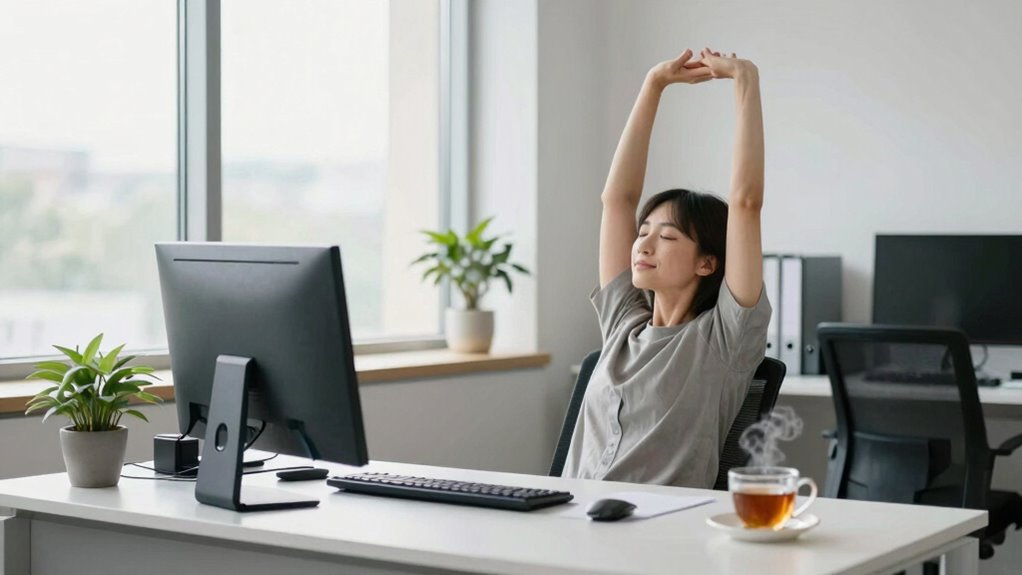
When you spend long hours at a desk, your body can quickly feel stiff and tense, making it harder to stay focused and comfortable. To combat this, incorporating a gentle mobility flow into your day can make a significant difference. Start by making ergonomic adjustments to your workspace—ensure your chair supports your lower back, your monitor is at eye level, and your feet are flat on the floor. These small tweaks prevent unnecessary strain, but they’re just the beginning. Once your workspace is optimized, integrating mindfulness techniques can help you stay aware of your body’s signals and encourage intentional movement.
A simple mobility flow can be done right at your desk and takes just a few minutes. Begin by gently stretching your neck side to side, easing tension from staring at screens. Then, roll your shoulders forward and backward in slow circles to loosen up the upper body. As you do this, focus on your breath—inhale deeply through your nose, filling your lungs, and exhale slowly through your mouth. This mindfulness technique helps you stay present and reduces stress, making movement feel more intentional and less like a chore.
Next, extend your arms overhead and stretch upward, feeling your spine elongate. Hold for a few seconds, then release and roll your shoulders back. You can also do seated spinal twists by turning your torso to one side, holding the armrest or the back of your chair, and then switching sides. These gentle movements improve circulation, reduce stiffness, and keep your muscles engaged without overexertion. Incorporating biodiversity in your environment, such as adding plants, can also promote a calming atmosphere that supports mindful movement and stress reduction. Research shows that greenery can positively impact mental health and overall well-being, enhancing the benefits of your mobility routine. Additionally, air quality plays a role in maintaining alertness and energy levels during long periods of sitting. Ensuring proper ventilation in your workspace can help reduce indoor pollutants and improve overall air freshness, which is crucial for sustained focus. Throughout this flow, remain mindful of your body’s sensations—notice where you feel tightness or discomfort and adjust accordingly.
Incorporate breathing pauses between movements—deep, diaphragmatic breaths that help relax tense muscles and clear your mind. This combination of ergonomic adjustments and mindfulness techniques creates a holistic approach to managing long desk days. It’s important to listen to your body and avoid forcing any movements that cause pain. Instead, focus on smooth, controlled motions that promote circulation and flexibility.
Performing this gentle mobility flow a few times throughout your workday can prevent the typical aches associated with prolonged sitting. It encourages a mindful connection to your body, helping you recognize tension early and address it before it worsens. Over time, these small, intentional movements will become a natural part of your routine, making long desk hours more tolerable and even beneficial for your overall well-being. Remember, consistency is key, and even brief pauses can make a significant impact on your comfort and focus.
ergonomic office chair with lumbar support
As an affiliate, we earn on qualifying purchases.
As an affiliate, we earn on qualifying purchases.
Frequently Asked Questions
Can This Mobility Flow Prevent Long-Term Posture Issues?
Yes, this mobility flow can help prevent long-term posture issues by promoting posture correction and increasing muscle flexibility. When you regularly practice the flow, you strengthen your postural muscles and reduce tension caused by extended sitting. Over time, these improvements can lead to better alignment and less discomfort, making it easier to maintain good posture throughout your day. Consistency is key to preventing lasting posture problems.
How Often Should I Perform This Mobility Routine Daily?
Think of your body as a garden that needs daily tending. You should perform this mobility routine about 2-3 times a day, like watering and weeding your plants. It helps with posture correction and complements ergonomic adjustments, ensuring your muscles stay supple and aligned. Regular practice keeps your posture strong, preventing long-term issues. Keep this routine a part of your daily self-care ritual to nurture your body’s health and resilience.
Are There Any Contraindications for Specific Health Conditions?
If you have specific health conditions or mobility restrictions, it’s crucial to consult your healthcare provider before starting this gentle mobility flow. Certain conditions, like joint issues or cardiovascular problems, might require modifications or avoidance of some movements. Pay attention to your body’s signals, and if you experience pain or discomfort, stop immediately. Tailoring the routine ensures safety and effectiveness, helping you improve mobility without risking injury or exacerbating existing health concerns.
What Equipment, if Any, Is Needed for the Flow?
For this gentle mobility flow, you’ll only need basic ergonomic accessories and stretching tools. A comfortable, supportive chair and an optional yoga mat can enhance your practice. You might also use resistance bands or foam rollers for gentle stretching and muscle release. Keep your space clear to move freely, and choose items that support proper posture. These simple tools make your flow more comfortable and effective during long desk days.
How Quickly Can I Expect to See Benefits?
You’ll notice immediate relief and improved muscle flexibility after just one session, like opening a whole new level of comfort! With consistent practice, you can expect to see sustained benefits in your posture, reduced tension, and increased mobility within a few weeks. Keep at it, and your body will thank you with less stiffness and more ease during those long desk hours. The transformation is truly remarkable!
adjustable monitor stand for desk
As an affiliate, we earn on qualifying purchases.
As an affiliate, we earn on qualifying purchases.
Conclusion
So, next time you’re stuck at your desk, remember this gentle mobility flow. It’s your secret weapon to banish stiffness and boost energy faster than a rocket launch. Just a few mindful moves can transform your long, sedentary hours into a wave of invigorating vitality. Keep moving, stay mindful, and watch your discomfort melt away like snow in the sun. Your body will thank you—trust me, it’s the ultimate game-changer for those endless desk days.
seated stretching guide for office workers
As an affiliate, we earn on qualifying purchases.
As an affiliate, we earn on qualifying purchases.
As an affiliate, we earn on qualifying purchases.
Fall Picks
fall essentials
As an affiliate, we earn on qualifying purchases.